En Eluttukal

  • About
  • Blog
  • Contact
  • ☰
    • Essays
    • Reviews
    • Groundhopping
    • Feautured

  • RB Salzburg vs Austria Lustenau: My Red Bull Arena Experience

    (Originally published on February 26th, 2023)

    RB Salzburg is a very controversial football club. It became the first ‘Red Bull Club’, after SV Austria Salzburg was taken over by the Austrian energy drink company in 2005. The takeover changed the course of Austria Salzburg forever. The traditional purple and white club colors were changed to Red Bulls’s red and white, the logo was completely redesigned, and their stadium was renamed to Red Bull Arena. Owing to this rebranding, many fans felt their club had lost its identity and walked out on their club. On the pitch, however, the club’s fortunes changed for the better. In the 72 years of their existence as SV Austria Salzburg, the club won just three domestic titles, measly in comparison to the whopping 13 that they won in the 17 years since the takeover. In the past decade and a half, RB Salzburg have also become regulars in European competitions and often take down bigger opponents. Overall, I think RB Salzburg has a bittersweet story – they have put Salzburg and Austria on the football map but at the cost of their loyal fans. So, I decided to take a short trip to Salzburg (instead of watching Bayern Munich dismantle Bochum) and see what a matchday in Red Bull Arena was like.
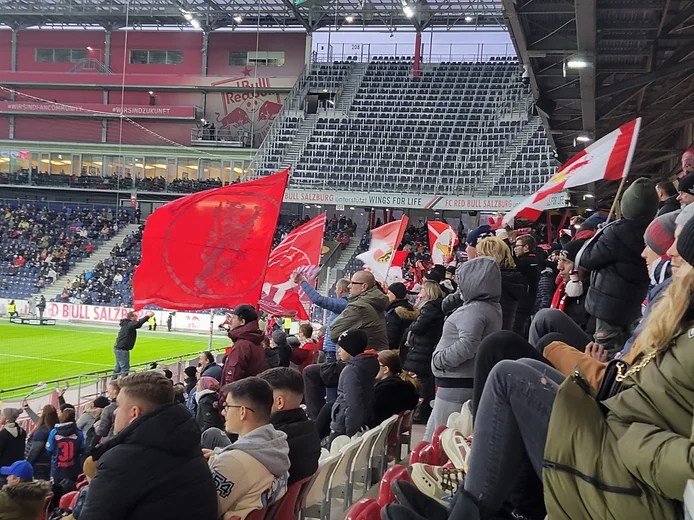
    Flags flying in the Nord stand, which is occupied by the Salzburg Ultras, during RB Salzburg’s home fixture against Austria Lustenau.

    When I visited, RB Salzburg hosted mid-table Austria Lustenau in what was both teams’ first league game back after the World Cup/Winter Break. Going into the game, Salzburg were six points clear at the top of the Austrian Bundesliga, while Lustenau were in 8th place (out of twelve total teams). I knew the tickets were not going to sell out, for a league game like this, so I decided to buy my tickets at the ticket office (so I could keep the physical ticket as a souvenir). Luckily, my judgement was right, and I was able to get the cheapest €20 ticket, minutes before kick-off. I was also able to add another scarf to my collection (it was a good quality one for €15, so I was pleased about that), before entering the stadium.

    I sat in the Nord Stand, which seated the adult home supporters (including the ultras). The Ost Stand, to my left, was filled with little kids (family sector), while the West Stand, to my right, was occupied by the more sophisticated fans who rarely applauded or stood up. A group of a hundred or so Austria Lustenau supporters sat on the opposite side, in a small sector in the Sud stand.

    There were very few fans above the age of 40 and the majority were young men and kids. Clearly, the older fans had a more personal connection to SV Austria Salzburg and were not interested in Red Bull’s team. However, I believe the domestic and European success made RB Salzburg very popular among the younger generation, who were in large attendance. Nevertheless, I was quite underwhelmed by the overall attendance (which was just over 5,000 in a 30,000-capacity stadium).

    The first half was an extremely boring affair with none of the teams really coming close to scoring. Salzburg had a few half chances but could not put their shots on target. The keepers were not called into any real action apart from breaking up some through balls and collecting a few crosses.

    The RB Salzburg ultras, who occupied the center of the Nord Stand, made some decent noise throughout the game but were not necessarily impressive. They were led by a capo who stood on a platform at the bottom of the stand, facing the fans (occasionally looking over his shoulder to watch the game). He would initiate a song by singing it into his mic (first time I have seen that), and his fellow ultras would quickly pick it up. After a few repetitions, the noise would die down, before the capo would shout into the mic and revitalize it. Unfortunately, each chant was repeated far too many times which prevented them from contributing to the energy in the stadium. It also felt disconnected from the events of the game because the capo who initiated them had his back towards the field.

    Towards the end of the first half, I was afraid I would fall asleep. I am sure my travel fatigue was the main cause, but the drawn-out repetitive chants and lack of interesting on-field action contributed to it as well. It also did not help that I did not know any of the players from either team (I blame myself for not doing the necessary pre-game research).

    As I went to the concourse at halftime, to explore the stadium a little bit, I ran into a father and son speaking Tamil. Just a few minutes ago, I was telling myself that I must be the only Indian in this stadium, so I was pleasantly surprised to see not just two Indians but two Tamilians. I immediately initiated a conversation, and asked them if I could sit with them during the second half. They not only agreed, but also bought me a pretzel (despite my vehement refusals). It turns out that the father is a big football fan, and he even went to the 2018 World Cup in Russia. They were in Salzburg because the son was applying to universities here (for music) and they decided to take the chance and go to the football.

    The second half was very different, yet similar to the first. It was different because Lustenau conceded two quick-fire goals after the break and collapsed completely. Fernando, Salzburg’s Brazilian front man, scored both those goals, having been assisted by Maurits Kjaergaard and Amar Dedić, in the 48th and 52nd minute respectively. Meanwhile, it was still similar to the first half because it did not get any less boring. In the 73rd minute, 18-year-old Israeli midfielder Oscar Gloukh got subbed on for his Salzburg debut. He is supposed to be a very promising young talent and a few years from now, I might look back on this game with a different significance. In fact, there are eight players in Salzburg’s squad who are younger than me (I am 19, born in 2003), and the average age of the team is just 21.8 years. This shows how this team is packing with young talent. Despite the negatives surrounding RB Salzburg, they deserve a lot of praise for their youth system, which is one of the best in Europe.

    Anyways, in the 76th minute, Salzburg added to their lead through a deflected long-range effort from Nicolas Seiwald. Domenik Schierl, the Lustenau goalkeeper did a good job to prevent Salzburg’s Junior Adamu from scoring on the initial opportunity, but he could do nothing about Seiwald’s deflected shot a few moments later. I also must admit that the music that played on the speakers after every Salzburg goal was quite catchy (with somewhat of a Western classical connotation), which I really enjoyed.

    Salzburg continued to dominate proceedings for the remainder of the game. In the first minute of injury time, Lustenau full back Jean Hugonet mishit a diagonal and conceded possession outside his own box. The resulting play concluded with Nicolás Capaldo, Salzburg’s Argentine midfielder, firing into the bottom right corner to score Salzburg’s fourth and final goal of the game.

    It was a convincing 4 – 0 win for Salzburg and even though Lustenau held them for the first half, the hosts never looked out of control. The atmosphere was underwhelming but it was not the most attractive fixture to begin with (maybe it is not so dull on a European night or against a fellow Austrian heavyweight). Even though I got to watch a team of promising young footballers take down a domestic opponent, I feel a slight regret for not going to the SV Austria Salzburg game instead. SV Austria Salzburg, which plays in Regionalliga Salzburg (Austrian third division), is a club created by the fans who walked out on RB Salzburg after the takeover to represent their old team. This club has a great story and an undoubtedly passionate fan base. Unfortunately, I only found out about them after I left Salzburg so I could not visit, but if any of you find yourselves in Salzburg, consider going to one of their games and tell me all about it.
    January 29, 2025
    Austrian Bundesliga, Football, Groundhopping

  • Servette FC vs FC Sion: My Stade de Genève Experience

    (Originally published on February 14th, 2023)

    Last week I went to Dortmund and checked off a bucket list football experience. This weekend, I wanted to take a shorter trip, to Bern, and watch BSC Young Boys play. However, I was informed that Sion would be visiting Geneva to play Servette in the Swiss Super League, a game that is known as the derby du Rhône (derby of the Rhone). I decided that this would be the ideal scenario to watch Servette play and cancelled my travel plans. While I did expect fireworks, I did not think I was going to see them literally. So, here is my derby day Servette FC experience from the beginning.

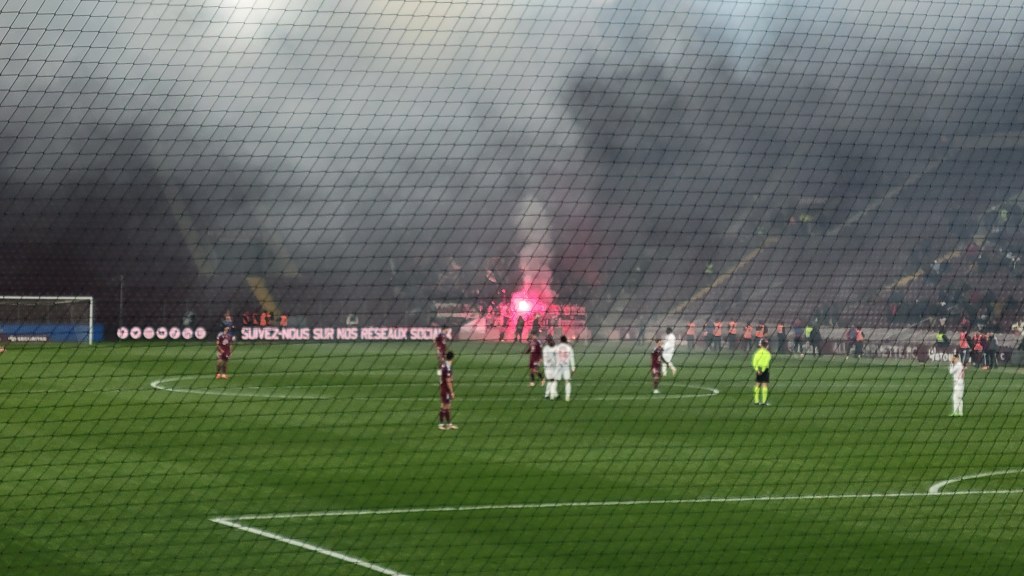
    Smoke clouds over the field as fireworks are set-off by Sion fans in the away end.

    The game was scheduled to kick off at 4.30 PM, so we (my study abroad friends Caleb and Jameson) left a good ninety minutes in advance to get there and take in the pre-game energy. We took a packed bus from Jonction to Stade de Geneve (a ten-minute commute) and got off at the main plaza, right outside the Nord Stand, where we were supposed to sit. The place was buzzing with local fans, and we could hear the Section Grenat (the Servette Ultras) who had already made their way into the stadium an hour before kickoff. I made my way to La Boutique des Grenat (a fan shop outside the stadium) to get myself a Servette scarf. I must say, I was a little disappointed with the selection of scarves they had (after being spoiled by the vendors outside Signal Iduna park last Sunday), but for a relatively smaller club like Servette, that is to be expected. I ended up getting a semi-decent one for CHF 25 but that was the best quality to price ratio they had. I also looked at the beanies, but they were CHF 35 and way out of my budget.

    With about thirty minutes to kick-off, we met some more of our study abroad friends and headed into the stadium. The central sectors of the Nord Stand were packed with Servette Ultras, with a more scattered but respectable crowd in the adjacent stands. Meanwhile, the Tribune Principale and Tribune Est, that lined the touchline, were getting filled up by families. The travelling Sion fans were packed into a corner of the Sud Stand and the remainder of the stand was left completely empty to prevent any clashes between both sets of fans.

    To paint the picture ahead of this Swiss Super league clash, this was Servette FC’s first game back after the World Cup interval (since their away fixture at Winterthur got postponed last week). They came into this game in 4th place (one point off second), with a game in hand. Meanwhile, 8th placed Sion were fresh off a loss to Lugano, but still seven points off the drop.

    As the teams walked out onto the field before kickoff, the Servette anthem began to play, and the 15,000 odd home fans joined in. Section Grenat, who were on their feet and in full voice since warmups, welcomed the kick-off by lighting dozens of flares. The first half was a scrappy affair with Servette marginally dominating possession. In the 17th minute, Chris Bedia opened the scoring for Servette. Gaël Clichy (former Arsenal and Manchester City fullback, who now plays for Servette) was defending right in front of us during the first half, and it was impressive to see this thirty-seven-year-old veteran compete against younger attackers. Around the mid-point of the first half, the Sion fans began to set off fireworks which stopped the game for a minute or two. I had never seen this at a football game, in person or on TV, and it was very amusing because Sion was a goal down. However, this was just the first of many more times that the game would be interrupted by the pyros.

    In the 33rd minute Chris Bedia took the ball down the left wing, dribbled past Sion’s Dimitri Cavaré, and finished past Heinz Lindner for his and Servette’s second goal of the game. With the Servette Ultras sitting just two sectors away from us, it was hard not to focus on them instead of the match. I heard some familiar tunes coming from Ultras section, but the lyrics were in French, so I could not join in. Nevertheless, the noise was immense, and it was only helped by the fact that it was a very physical, emotionally charged game. Players from both teams were going full-blooded into fifty-fifty balls and Sion racked up three yellows in the first half. In fact, Sion’s Wylan Cyprien was shown two yellow cards in the 41st minute – for a rash tackle followed by sarcastically applauding the referee – and Sion headed into the break two goals and a man down. During halftime, I decided to explore the inside of the Stadium and I found some beautiful murals, painted on the inside walls of the Nord Stand, that depicted the history of Servette FC.

    When I walked back out to my seat for the second half, the floodlights were on, and the vibe was completely different. I was taken completely by surprise when Mario Balotelli (former Manchester City striker) was subbed on for Sion at the half. I had no idea that Balotelli (who is such an infamous figure in the footballing world) played for Sion. In fact, I did not even know he still played professional football. Anyways, Sion scored five minutes into the second half, somewhat against the run of play, through substitute Giovanni Sio. The flares were back in the away section, and it was game on once again. Although stunned, the home fans did not take long to restart their songs and revitalize their team. As the half progressed, Servette gained momentum and had some great moves towards the goal. However, the Sion fans constantly set off their fireworks to disrupt the game and kill Servette’s momentum. Once the skies completely darkened, around the 75th minute, the lightshows began. Both sets of ultras lit up smoke bombs, parachute flares, and pyros and the game was stopped once again. Eventually, the smoke clouded over the pitch, and we could barely see beyond the half line. This was a stereotypical European football scene, something I always dreamed of witnessing when I lived in India and in America.

    Section Grenats, the FC Servette Ultras, setting off pyros during the second half of the derby du Rhone.

    While it might seem like the fans were the highlight of the experience, both teams played some very laudable football. Servette had some sharp passing combinations, that ended in well-weighted through balls while Sion had several spells of intricate passing within the Servette box. Players from both teams showed incredible dribbling skills to get out of tight spaces and the football on offer was not to be underestimated. In the 85th minute, Sion won the ball in the midfield and scored off an unfortunate deflection off the foot of Servette’s David Douline. Sion had equalized and their players ran off towards the far corner to celebrate with their fans. Meanwhile, the area around us was in a temporary shock. A ten-man Sion team had just fought back from 2 – 0 down at the break and were looking to hold on for a well-earned point on the road. The last few minutes were extremely tense as Servette attempted to find a late winner. Despite having a couple of late free-kicks and multiple late corners, Servette failed to find a winner and the derby du Rhone ended in a 2 –2 draw.

    After the whistle, both sets of players went to their respective fans to applaud them and thank them for their support. Meanwhile, we just sat there and recounted what we had just witnessed. My study abroad friends, who had no prior knowledge of football, loved the experience and they felt it was 20 CHF well spent. I was just blown away by how incredible the fans and football were in this game, despite it being between two relatively uncelebrated European football teams.

    January 29, 2025
    Football, Groundhopping, Swiss Super League

  • Borussia Dortmund vs FC Augsburg: My Westfalenstadion Experience

    (Originally published on January 31st, 2023)

    Dortmund
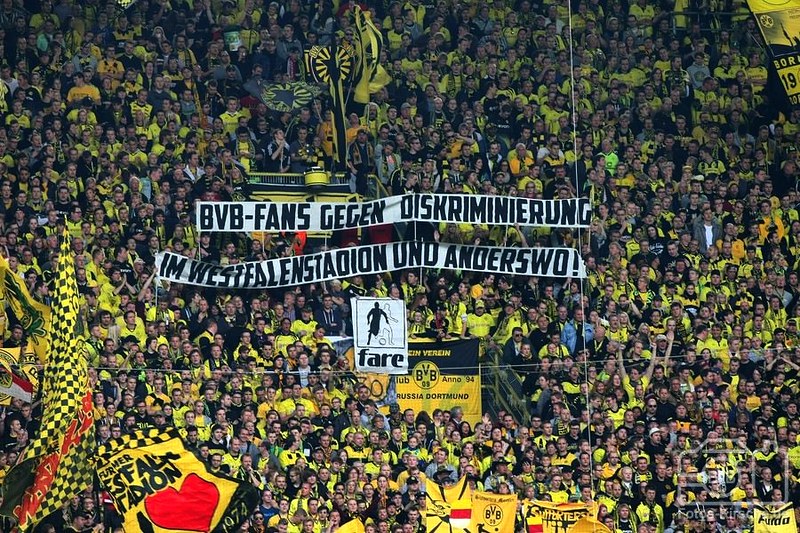
    “Borussia Dortmund fans against discrimination”, by Fare network, licensed under CC BY-NC 4.0

    On the 22nd of January 2023, I was lucky enough to experience a Borussia Dortmund game at Signal Iduna Park. FC Augsburg were visiting for the re-opening of the Bundesliga after the mid-season World Cup break, and I managed to secure myself a ticket for 50 Euros.

    I wanted to reach the stadium a good two hours before kick-off so I could explore the area. However, I underestimated the matchday rush and I ended up reaching the stadium just thirty minutes before kick-off. While on the train to Signal Iduna Park, I decided to go ahead initiate a conversation with some Dortmund fans in English. I ended up talking to a father and son (about mid 60s and late 20s respectively) who lived in Köln but were Dortmund season ticket holders. Turns out the father was born and brought up in Dortmund and he has had season tickets for over forty years. He had been going to games since when they played at Stadion Rote Erde (now the home of Borussia Dortmund II) and when they used to juggle between the Bundesliga and Bundesliga 2. Our conversation continued during the walk to the Stadium, and they answered my many questions about German football culture. They said ‘proper football fans’, like what you would see in this region, hated teams like RB Leipzig due to the way they are run. They also said the number of away fans in the stadium depended on the team, and teams like Leipzig hardly brought any. They asked me about what brought me to watch Dortmund, and I explained to them that I just loved football and that the Dortmund experience was a bucket list one. Eventually, they left to enter the stadium and I went to buy a Dortmund scarf.

    While waiting in line to buy a scarf, I ran into three tourist fans from Leeds. I told them how much I loved Tyler Adams and Brendan Aaronson, and they asked me if I was American. I said I was, in a way at least, and sang the one line of ‘Marching on Together’ that I knew. They immediately caught on and sang the next three lines in full voice, much to the amusement of the Dortmund fans around us. I had been craving this kind of football culture for so long and this conversation was my first real taste of it.

    Anyways, I found the gate and entered the stadium with about fifteen minutes to kick-off. The Augsburg players were warming up in front of us, so I caught a little bit of that. However, from here till the end of the game I was too worried about filming the experience that I did not quite live in the moment.

    A few minutes before kick-off, ‘You’ll Never Walk Alone’ began playing and I was able to join in because I knew the language. Unfortunately, I was not able to sing any of the songs that followed because they were all in German. A minute of silence was held in the memory of the late Pelé, before the game finally kicked off.

    In the first half, Dortmund was attacking towards our end (opposite the Yellow Wall). They were dominating possession from the get-go, and it was a pleasure to watch Jude Bellingham play in person. He was the focal point of every Dortmund build up and he led every one of their counter attacks as well. Just the way he moved in and out of space, checked his shoulder, received the ball, turned, and released it into the space on the flanks was quite the spectacle. The Augsburg keeper, Rafał Gikiewicz, made a great double save to deny Dortmund the opening goal early in the first half. For that second save on Raphaël Guerreiro, he took the shot full force to the face from point blank range. With how cold it was, I empathized with his pain, but I am sure the adrenaline created by the atmosphere in the stadium was enough to get him back on his feet. Just before the half hour mark, Jude Bellingham opened the scoring with a spectacular goal. He made himself an inch of space and struck the ball so clean. Watching it all happen from five rows behind the goal was truly incredible.

    Something that I kept getting frustrated with was the number of times Dortmund tried to build out of the back and failed. In fact, this is what led to Augsburg’s first goal in the 40th minute, when Arne Maier capitalized on Nico Schlotterbeck’s giveaway outside his own box. To his credit, the Dortmund center half made amends by nodding in a whipped free kick from Julian Brandt, to put his side back up by one. Dortmund almost scored a carbon copy of the Schlotterbeck goal when Mats Hummels got on the end of another Brandt free kick, but this time Gikiewicz held his line and made a crucial save. With seconds to go before the break, Augsburg’s Arne Engels played a brilliant through ball to Ermedin Demirović , who finished past the Dortmund backline to once again equalize for Augsburg. Despite Dortmund controlling much of the first half, the two teams went into the break level at two.

    Augsburg nearly took the lead at the start of the second half, but Demirović put his opportunity wide of the far post. It was a huge let off for Dortmund, who were the better side in every other department. Soon, Sébastien Haller, Gio Reyna, Thorgan Hazard, Niklas Süle and the other Dortmund substitutes began warming up behind the goal in front of us. With Dortmund needing a breakthrough, the substitutions were imminent. In the 62nd minute, Haller was subbed on, to the applause of 81,000 people, as he made his return after being diagnosed with testicular cancer six months ago. In the 75th minute, Dortmund took the lead again for the third time in the game when substitute Jamie Bynoe-Gittens scored a spectacular solo goal in front of The Yellow Wall. However, less than a minute later, Augsburg had a fantastic exchange of passes outside the Dortmund penalty area which eventually led to David Čolina scoring with his first touch in the Bundesliga. It was now 3–3, Augsburg had equalized for the third time, and the Dortmund faithful around me were losing their patience. It was an incredible back and forth game, with Augsburg matching Dortmund blow for blow.

    In the 78th minute, Gio Reyna, another Dortmund substitute, struck a spectacular volley across the phase of goal and into the top corner to give Dortmund a 4–3 lead. To the relief of every home supporter, Dortmund managed to hold on to their lead as they came away with all three points.

    After the game, I hung around inside the stadium to wait for the players to come around and applaud our section. Players from both teams, who did not see any playing time on the night, did box-to-box sprints to work on their fitness, which was very interesting to see. Finally, I left the stadium and took a packed train back to Dortmund HBF. During the train journey back, there were several spells of Dortmund chants that emerged from the mouths of drunk, yet elated Dortmund fans. Despite the number of goals conceded, it was yet another successful night for those in Black and Yellow.

    I had just witnessed a seven-goal thriller at one of the most celebrated footballing venues in the World, but for some reason the whole experience went by like a dream. I do not know if it is because I watched it alone, or because I could not join in any of the chants, or because I was too occupied trying to film the experience. Nevertheless, I am grateful for being able to go and watch football games such as this. Sometimes travelling and watching football alone, in places that you have never been to before, opens unique opportunities and experiences that you cannot have when you bring your friends along.

    January 29, 2025
    bundesliga, Football, Groundhopping

  • Football Just Peaked – Is it all just downhill from here?

    (Originally published on December 25, 2022)

    On 18th December 2022, football may have peaked (at least for the foreseeable future). Now, Messi fans will never lose a debate, the Three Lions’ fans will enter their 57th year of hurt, and the seasonal football fans will enter dormancy. However, we perennial football viewers will tune into Premier League action on the 26th of December. The question is, can the Premier League bring anywhere near the excitement that the World Cup final brought us, or will post-World Cup depression send football fans into melancholy. We just experienced the World Cup’s ‘Aguero moment’ and before we could even take a breather, we have the Premier League’s most awaited fixtures – those of Boxing Day.

    But are these Boxing Day fixtures significant anymore? Normally, the World Cup is in the summer, somewhat of a conclusion to what would have already been an incredible season. The domestic leagues would have concluded, followed by the dramatic European competitions and then, after a couple of weeks or so, the World Cup would have been a fitting finale. For a good month or so after the World Cup, top tier football will escape into the backdrop and give us some time to reignite our football fever. Only then will the next domestic season slowly start up again. By mid-August, we would be starving for the ‘beautiful game’ and the new season would be a fresh start.

    Now, we are resuming Premier League action, with the biggest football game in four years not even being ten days old. If the Champions League concluded mid-season, would the rest of it really matter? Probably not, and it feels quite the same, if not worse, with the World Cup finishing in December. Beyond that, Messi winning the World Cup felt like a victory for every Argentinean, every neutral, and basically everyone else who is not French or a CR7 fan. Now, how do we go back and support Chelsea, or Man United or Liverpool, who are all battling it out for a measly top four.

    But I have hope. Maybe when I turn on that Brentford vs Spurs game on Boxing Day, the tension of a London Derby, the Brentford faithful in loud voice, the laudable ‘non-FOX’ commentators, and the destiny of my FPL team might bring back the drama and excitement of the beautiful game. I do not expect it to match or better the drama of the World Cup, but I do expect it to be entertaining in a different sense. The Premier League broadcast team will have a lot on their hands to make it as big of an occasion as possible, but they might just be able to do it. After all, they have played the lead role in making the Premier League the most-watched Sports league in the world.

    While we do rather unwillingly (or willingly) shift our focus back to club football, it is worth noting some of the significant details in the Premier League that may have gone unnoticed in the buildup to the World Cup. First of all, Arsenal are five points clear at the top. Unfortunately for them, ‘tis the time of year when many great teams collapse after a promising start to the season. Man City are on their tail in second place, ready to make them pay for any future failures. Quite surprisingly, Newcastle are in third place, on the back of five successive wins. They will be looking to maintain their rank, clinch European football, and mark the beginning of a new era. Spurs are in fourth position, followed by United and Liverpool. Erik ten Hag seems to have turned things around at United as they are still in top-four contention, while Klopp’s Liverpool seem to have fallen off their perch this season. Chelsea sit in eighth place after ownership changes, a disappointing start to the season and the sacking of Thomas Tuchel. Meanwhile, Brighton and Fulham are exceeding expectations, sitting in seventh and ninth place, respectively. Despite a promising Europa League campaign last season, West Ham have declined drastically – just one point off the drop zone. Nottingham Forest, Southampton, and Wolves make up the bottom three, but it is too early to call their downfall. Southampton have regularly escaped relegation in recent years, while Wolves, a promising mid-table side, are sure to find a solution.

    Starting with Boxing Day 2022, I am sure the remainder of this Premier league season will bring plenty of drama, entertainment, and reasons to love this great sport. However, can anything oust or even match the significance of the World Cup final that took place just seven days ago?

    January 8, 2025

  • Emi Martinez, the Champion of the World

    (Originally published on December 20, 2022)

    Emi Martinez is an Argentine hero, a trash-talking icon, and an idol for millions of young goalkeepers worldwide. However, just two and a half years ago, he was a little-known backup goalkeeper who was battling to stay in top-flight European leagues. Emi Martinez’s story is one of perseverance, dedication, and hope. His career so far represents a steep exponential curve, with the dreariest of flats followed by a glorious climb.

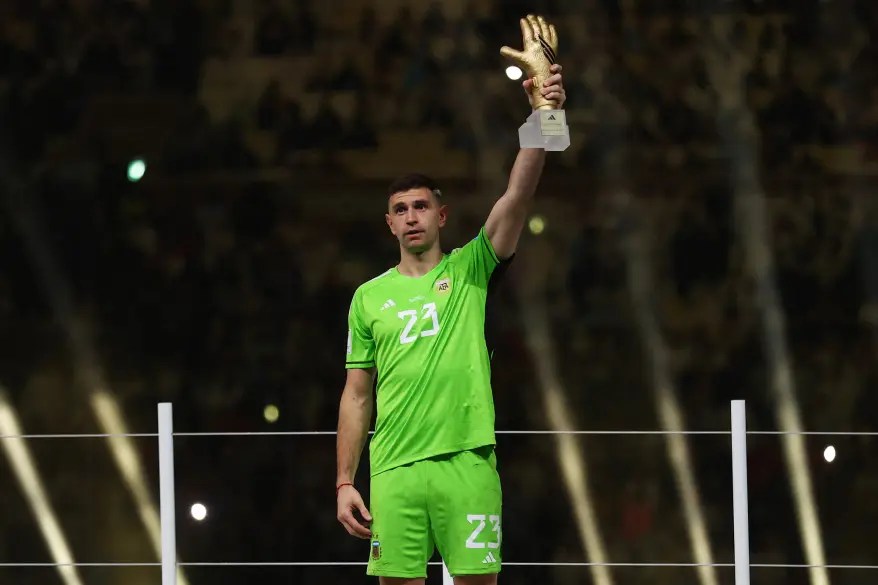
    Emi Martinez holding up the Golden Glove that (symbolically) won the 2022 FIFA World Cup for his nation.

    On the 20th of June 2020, what seemed like an insignificant play set off a chain of events that would conclude with Martinez. Messi and Argentina lifting the World Cup.

    When the Premier League resumed after the covid-19 suspensions, a mid-table Arsenal travelled to Brighton with the hope of revitalizing their 19/20 campaign. In the 36th minute, Arsenal Goalkeeper Bernd Leno came off his line to collect an overhit long ball. Neal Maupay, who was the intended target of the pass, had given up chase. However, the ball took an awkward bounce and slowed down its approach into Leno’s hands. Seeing the opportunity, Maupay made one last half-assed attempt at retrieving the ball, ultimately colliding with Leno in mid-air, after the Arsenal shot-stopper had already collected the ball. Leno went down with a loud scream (heard even on the broadcast), having landed awkwardly on the ground – he had severely hurt his knee.

    I remember sitting in my room, at my desk watching Leno get taken off on a stretcher, furiously cursing and wagging his finger at an apologetic Maupay. It was a needless challenge that had ended in the worst possible way. A little-known 27-year-old goalkeeper, named Emiliano Martinez, came on to replace Leno. The Argentine net-minder had been with Arsenal for the past ten years but had never really broken through to the first team. He had been sent on numerous loan stints over the years, but none of them had clicked. Against Brighton, Martinez showed that he was a very capable keeper. He made several important saves and ealt with multiple crosses. However, Brighton equalized in the 75th minute and Maupay scored an injury time winner, adding insult to injury (quite literally) for the Gunners.

    The lows were only temporary for Arsenal though, as Martinez finished the remainder of the 19/20 season in fine form. In fact, his remarkable performances in the FA semi-final (against Manchester City) and final (against Chelsea) led Arsenal to some silverware and a spot in Europe, masking their otherwise forgettable 19/20 campaign. In the post-match interview, after the FA Cup final, Martinez broke down into tears when asked about what this victory meant for him and his family. It showed how hard he had to work for this opportunity and how passionate he was about football.

    Despite all this, Arsenal decided Leno, who was back fit, would be the first choice in net going into the 20/21 season. Emi Martinez was desperate for a starting role, and his brief show of potential earned him interest from numerous clubs. Eventually, he chose fellow Premier League club Aston Villa and quickly established himself as their starting keeper. His first season at the West Midlands was a great success – he equaled the club record for clean sheets in a season (15), was voted as the Villa supporters’ player of the season, and he helped Villa finish 11th (six places ahead of the previous year). Martinez received a lot of praise for his ability to hold the ball (when making a save), cross collection and distribution, all of which make up the core components of a ‘modern day goalkeeper.’

    In the summer of 2021, Martinez was called up to the Argentina squad for a series of World Cup Qualifiers. He made his senior international debut on 3rd June 2021 against Chile. Good showings meant he would start in goal for his country in the 2021 Copa America later that month. In what could potentially be Messi’s last chance at winning the tournament, the pressure on the Argentine players was immense, and more so on the Argentine keeper. However, Martinez lived for moments like these, and he would thrive under the pressure. In the first game against Chile, he helped his side secure a 1 – 1 draw. The only goal conceded was from the rebound off a penalty that Martinez had saved. In the semi-final against Colombia, Emi Martinez put on another excellent penalty saving display by stopping a whopping three spot-kicks in the shootout, thereby ensuring Argentina’s spot in the final. Recently, Peter Drury described Martinez as a ‘character keeper,’ and this was where we saw that side of Martinez for the first time. Playing for his country meant more than anything to him and he did everything in his power to lead his country to glory. His pre-penalty antics and the way he got into the penalty taker’s head was comical yet effective.

    The final was against an extremely strong Brazilian side but a clean sheet from Emi Martinez and a lone goal from Angel Di Maria led Argentina to a narrow 1 – 0 victory. Despite having made his international debut just 37 days ago, Martinez had helped Argentina to South American glory. He also took home the Golden Glove award, for being the best keeper in the tournament. With Martinez in goal, Messi was finally able to win a major international tournament with his country. Having waited a decade in the shadows at Arsenal, Martinez’s rise to stardom was rapid. Yet, this was just the beginning.

    Having announced himself to the Argentine public in spectacular fashion, Martinez returned to England and had another commendable season. It may have not been as impressive as his first season at the West Midlands, but he was still one of Villa’s top five performers. Villa finished the 21/22 campaign in 14th place, but it might have been worse if not for Martinez’s efforts in goal.

    The 2022 World Cup was looming ahead, and Martinez was the undisputed starting keeper for Argentina. In an interview with the Athletic, Emi Martinez reminded everyone how much playing for his country at the World’s biggest stage meant to him. He said, “Maybe when I hear the national anthem, the tears might be there.” and “I will tell myself, ‘I’ve made it’, when the first game starts.” Once again, the pressure was paramount as it was sure to be Messi’s last attempt to win the elusive World Cup. Martinez had won the hearts of the Argentine public after the Copa America in 2021, but everyone knew he could become public enemy no. 1 if he failed, here.

    In Argentina’s opening game against Saudi Arabia, La Albiceleste astonishingly threw away a 1 – 0 lead and lost 1 – 2. Despite Emi Martinez not being responsible for any of those goals, boos rung out every time he touched the ball in their next game, against Mexico. However, Martinez did not let that faze him and a spectacular free kick save against Mexico’s Alexis Vega silenced his critics. Martinez continued to be immense for Argentina, in an unobtrusive sort of way. La Albiceleste could not have progressed to the final without Martinez’s last minute save against Australia in the round of 16 and two-penalty shootout saves against the Dutch in the quarter finals.

    Emi Martinez making a crucial stop against Australia’s Garang Kuol, in the 90 + 7th minute of their World Cup round of 16 matchup, to maintain Argentina’s 2 – 1 advantage.

    In the final against France, Kylian Mbappe put three past Martinez but there was little he could have done about any of them. With the game level at 3 – 3, Emi Martinez denied French forward Kolo Muani from point-blank range in the 120 + 3rd minute. If the Frenchman had scored, it was sure to be the last kick of the game and Messi and Argentina would have fallen short once again. But Emi Martinez had kept the Argentine dream alive, sending the game to penalties. Martinez’s shootout save combined with Argentina’s perfect record from the spot sealed a fairy tale ending for Lionel Messi. After repeated international heartbreaks, since 2006, Lionel Messi had finally completed the international double in his last attempt.

    While the World celebrated Messi and his career, I had to look back at Emi Martinez’s unprecedented journey to the top. Just two and a half years ago, merely playing in the World Cup was a faraway dream for Martinez. Now, he had won football’s greatest trophy, while being the Golden Glove winner (the tournament’s best keeper). A decade of unrecognition and failed loan spells, to a meteoric rise to the pinnacle of football – Martinez’s story is truly inspiring.

    Lionel Messi (right) embracing Emi Martinez (left) after his penalty shootout heroics against The Netherlands in the World Cup quarter finals, on 9th December 2022.

    It is funny to think that it all started with Neal Maupay (half French half Argentine by the way) needlessly contesting a lost cause. But we still do not know what the future holds for Emi Martinez, World Cup glory may just be the beginning of his success. However, one just cannot help but feel that Emi Martinez was put on this planet with one job – to help Messi finally accomplish his international dream. M.S. Dhoni did it for Sachin Tendulkar in 2011, Kyrie Irving did it for LeBron James in 2016, and now Emi Martinez did it for Leo Messi in 2022.

    January 8, 2025

  • The Day the G.O.A.T Completed Football

    (Originally published on December 19, 2022)

    Many years from now, we will look back on the 18th of December 2022 as the day Lionel Messi, the greatest ever, completed football. However, anyone who witnessed it live will know that the journey, even on the final day, was far from straight forward.

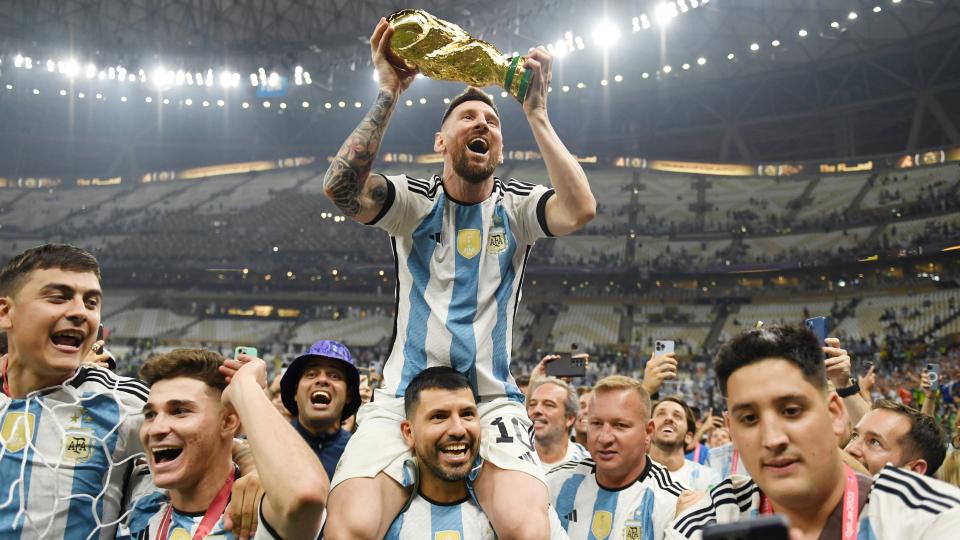
    Lionel Messi lifted up on the shoulders of his teammates, as they parade around Lusail Stadium with the World Cup after defeating France in the 2022 World Cup Final.

    Going into the 2022 World Cup final, the storyline was that Lionel Messi had one last chance to win the elusive World Cup, while Kylian Mbappe had the chance of extending his perfect record at the World’s biggest stage. It was to be a showdown between a South American superpower driven by passion, emotion and skill and the defending champions from Europe who were methodical, clinical, and ruthless.

    Argentina started the game on the front foot. Angel Di Maria, after his short absence due to injury, was more motivated than ever. His first half performance was staggering – he ran circles around defenders, won his side a penalty and finished off a devastating counterattack to give his country a 2 – 0 lead. As for the Great Man, he was built for the big stage. He did not let the moment tear him down. He had missed his penalty in the 2016 Copa America final, and he had two penalties saved earlier in this tournament, but none of that would affect him now. He scored his penalty and wheeled off to the corner flag to celebrate in front of the Argentine fans. Argentina’s second goal was pure class. It was the epitome of Argentine football – the perfect blend of passion and skill. Argentina won the ball just outside their own penalty area and just five clever passes later, Angel di Maria finished past an onrushing Hugo Lloris. Alexis MacAllister was an unsung hero for this goal, this game, and the tournament for Argentina. Despite playing for an ‘unfashionable’ Premier League club in Brighton & Hove Albion, the 23-year-old was the brightest spot in the Argentine midfield throughout the tournament.

    Argentina’s fans were in full voice ever since the onset of their national anthem prior to kick off, and they had no reason to stop. The La albiceleste continued to keep Lloris busy for much of the second half and even after 75 minutes, France were struggling to string ten passes together. Didier Deschamps made a series of changes to instigate a response from his side. He brought on Randal Kolo Muani in the 41st minute, and Kingsley Coman, and Eduardo Camavinga in the 71st. According to me, the trio were instrumental in changing France’s fortunes late in the second half. In the 79th minute, Kolo Muani went on a powerful run that ended with Otamendi bringing him down in the box and conceding a penalty. Mbappe was trusted with the penalty duties, and he did not falter, bringing the French within one. Just 97 seconds later, Messi dallied on the ball a second too long and Camavinga stole it off him. The resulting play ended in a superb volleyed finish from Mbappe for his and France’s second. In Peter Drury’s words, “Football can be a strange game,” and it certainly was on this big occasion. Argentina worked hard and dominated for 75 long minutes, only for it to be nullified by two minutes of negligence. It was France’s clinical finishing that got them past England and Morocco in the previous rounds and it was happening for them again.

    After France’s two goals in two minutes, you felt it was just not to be for Argentina. You felt history would repeat itself and they would fall short once again. The wind was knocked out of the La albiceleste, and their fans were silenced. The eight minutes of added time were frantic as both sides tried to find the winner before extra time. Emi Martinez made a crucial save on Kolo Muani, after the referee played a brilliant advantage. On the other end, Hugo Lloris made an important save to deny Messi a 90 + 7th minute winner.

    The first half of extra time was a relatively dull affair until Lautaro Martinez got subbed on for Argentina in the 103rd minute. Lautaro was immediately involved in a promising attack, but his shot was blocked by a spectacular last-ditch tackle from Dayot Upamecano. The rebound bounced out to Gonzalo Montiel, whose brilliant first-time volley, that looked certain to nestle into the top left corner, was bravely headed away by Raphael Varane.

    Throughout the remainder of extra time, Lautaro had multiple chances that were just about dealt with by French defenders. It is an extremely harsh statement, but Lautaro’s performance bore an uncanny resemblance to a certain Gonzalo Higuain disaster class on this same stage eight years ago, that deprived Argentina of the World Cup. However, in the 108th minute, Lautaro did help Argentina break the deadlock as he initiated a clever interchange between himself, Enzo Fernandez, and Messi. This led to a shot of his own, which was parried by Lloris straight into the path of Messi, who tapped in Argentina’s third on the night.

    One felt it was surely over now, with Marcos Acuna successfully wasting time in the corner, Rabiot and Varane going off injured for France and the Argentine midfielders breaking up every promising French build up.

    However, there was another twist in the tale. France were awarded another penalty as Mbappe’s shot was blocked by the arm of Montiel, from inside the box. It was as if France were awarded a route back into the game for all the bad karma accumulated by Argentina over the course of the game and tournament. Players like Enzo Fernandes, Marcos Acuna, Rodrigo De Paul, and Leandro Paredes were constantly kicking ankles, making dirty tackles, pulling shirts, kicking the ball into the stands after the whistle and going to ground for minimal contact. As much as I adored Emi Martinez and respected Messi, I found it difficult to support Argentina because of this disgraceful behavior from many of their teammates.

    Anyways, Mbappe stepped up and converted his second spot kick of the night, thereby completing his hat-trick and equalizing for France. Mbappe was clutch. Despite his age, he carried his nation’s hopes on his back. Just ask Harry Kane how difficult it is to score two penalties in a game. I cannot imagine what the Argentine fans and players went through today, because they were back at square one yet again.

    In the third and final minute of added time, in extra time (120 + 3rd minute), Otamendi failed to cut out a long ball and Kolo Muani found himself in prime position to score the World Cup winner for France. Somehow, Emi Martinez was able to spread himself and thwart the French forward from point-blank range. I simply cannot fathom how significant of a save this was. These are the moments goalkeepers dream of and live for, and Emi Martinez made the save of his career to keep his nation alive. Within a few seconds, Argentina went straight down the other end, but Lautaro Martinez nodded his half chance wide.

    After two hours of thrilling football, the game headed to penalties. Mbappe stepped up again for France and despite Emi Martinez (and every viewer) knowing exactly where he was going to put it, he still found the net. Messi simply would not slip up in his biggest moment and he converted again as well. Emi Martinez lived up to his reputation of being an exceptional penalty stopper as he denied Kingsley Coman’s spot kick. Aurelien Tchouameni’s miss for France and a series of perfect penalties from Dybala, Paredes and Montiel for Argentina meant La albiceleste were finally World Cup winners after 36 years long years. Mbappe’s best efforts were not enough for France, but he is on course to becoming the next Great thing in World Football. Emi Martinez’s rise to stardom is unprecedented and inspiring, considering that he was not even a Premier League starter two and a half years ago.

    After a rollercoaster of a ride, in this game and in his international career, Messi had achieved football’s greatest prize in his fifth and final attempt. The debate for the ‘Greatest Male Footballer of all Time’ might, just might, be over for the time being. It was a fairytale ending and a god-like farewell from the beautiful game’s biggest stage, for Lionel Messi. Over the past 19 years, he had seen it all, done it all, and now, won it all.

    January 8, 2025

  • Greatest NCAA D3 Tournament Games of the 22′ Season (that I watched): North Central vs UW Superior

    (Originally published on November 19, 2022)

    The first two rounds of the 2022 national tournament took place last weekend at regional campus-sites around the country and I tuned in to some of the streams to catch a glimpse of some thrilling win-or-go-home tournament soccer. Here are some of those incredible games.

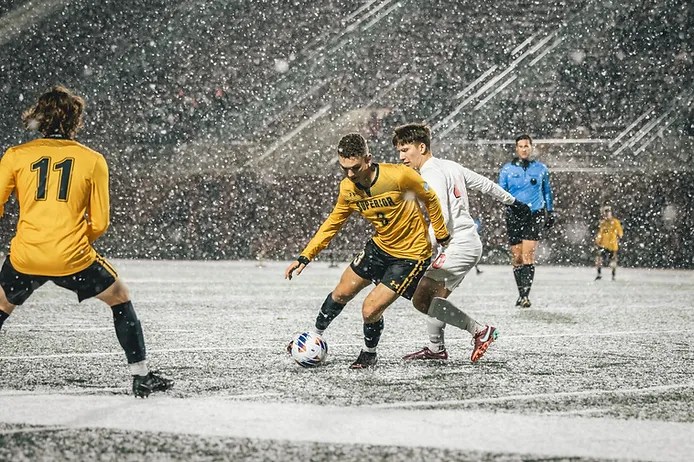
    UW Superior’s Josh Bellamy (middle) taking on North Central’s Johnny Kraemer (right) in their NCAA tournament first round matchup on November 12th 2022.

    The first-round matchup between North Central and UW Superior summed up D3 soccer as I know it. The North Central Cardinals came into this game ranked #10 in the nation with a 16 – 0 – 4 record. They had just defeated North Park in the extremely competitive CCIW (The College Conference of Illinois and Wisconsin) championship game. That game probably warrants its own blog post, but more on that later. Given how dominant their season was, North Central College was selected to be a regional campus-site and would host their regional pod.

    Meanwhile, the travelling UW Superior Yellowjackets were fresh off a comfortable 3-0 win against Bethany Lutheran in the UMAC (Upper Midwest Athletic Conference) Championship game and boasted a 16 – 3 – 2 record. However, they were not even ranked in their region.

    It was a frosty night in Naperville, IL and as the game progressed, the field began turning a dull white in the Chicago snowfall. The Cardinals were heavy favorites, as you might have guessed, and they lived up to it by piling on the pressure from the get-go. In the 5th minute, North Central’s Jaziel Enriquez came close to netting the first goal of the game, but the opposing keeper Alex Paredes was equal to it. Eight minutes later, the Cardinals found success off the foot of midfielder Aiden Westerberg, who notched his 10th goal of the season. They nearly doubled their lead in the 23rd minute through a Matteo Innocenti strike but Alex Paredes made another crucial save to keep the Yellowjackets within one. Just a few minutes later, the Yellowjackets made the Cardinals pay for their missed chances as they pulled level through their main talisman, Blake Perry. No one managed to break the deadlock for the remainder of the half and the teams headed into the break, tied one a-piece.

    The Cardinals started the second half on the front foot and nearly went ahead just 42 seconds in, but Edoardo Bonifacio’s attempt was well saved by Alex Paredes. As you can tell, Alex Paredes was having an excellent game in goal for the Yellow Jackets and was single-handedly keeping things close.

    The game would take an exciting turn in the 74th minute when North Central’s Jack Bonavia received two yellow cards within the span of five minutes, giving the Yellow Jackets a man advantage for the remainder of the game. Twelve minutes later, UW Superior made the Cardinals pay, as their sophomore midfielder Gavin Watkinson slid one past the Cardinals netminder, giving the Yellow Jackets a 2 – 1 lead. With just 4 minutes remaining in regulation time, it appeared as if the Cardinals would bow out of the first round of the NCAA Tournament for the second year running. However, the Cardinals fought to stay alive, and they were rewarded in the 89th minute when Jaziel Enriquez found the bottom left corner of the Yellow Jackets net and levelled the game at two. It looked like the 10-men Cardinals would cling on and push the game to extra-time.

    With about 45 seconds remaining, UW Superior won a corner kick and pushed numbers forward with the hope of scoring the winner in the last play of the game. The corner was cleared at the first post and a devastating North Central counterattack ensued. Jaziel Enriquez, once again, found himself advancing towards the UW Superior net but this time he slid the ball through to freshman Daniel Navarro, who chipped a hapless Paredes to score his second collegiate goal and take the North Central Cardinals to their first ever NCAA tournament victory.

    Once the final whistle blew, the emotions could not have been more dissimilar. The Cardinals were celebrating their greatest win in program history, while the Yellowjackets sank to their knees in disbelief. The game had everything – early goals, late goals, red cards, a last gasp comeback, and an underdog story that was not to be. After battling it out in the bitter cold and a snow-covered Benedetti-Wehrli Stadium, the North Central Cardinals would live to see another day. They would host the St. Olaf Ollies, a historically successful D3 men’s soccer team, the next day in Naperville, IL.

    January 8, 2025

  • The Hidden World of NCAA D3 Soccer

    (Originally published on November 18, 2022)

    NCAA Division 3 (D3) Soccer is often overlooked when it comes to College Sports in America. And it comes as no surprise, since even Division 1 (D1) Soccer is not vey popular in comparison to other NCAA Sports. However, I happen to play D3 soccer, which has led me to watch a fair amount of D3 soccer games, and I have a different story to tell.

    Webster University’s Tavis Cameron (middle) taking on the University of Minnesota Morris’ Gabe Arreguin (left) during their non-conference matchup on September 2nd 2019.

    D3 soccer is very unique. It is unlike any other form of soccer that I have come across so far. There are close to 350 teams which bring with them varying playing styles. You have your ‘traditional’ D3 teams, that specialize in long throws, crowding the box during set pieces and spamming crosses into the area. Then, you have teams, like those in the UAA (United Athletic Association), that play a style of soccer which is very pleasing to the eye. They dominate possession and try to break the opposition through their intricate passing. These teams have players who could have potentially gone D1 but chose D3 for its more academic institutions. Finally, you see teams that employ the classic ‘kick and run’ style of soccer. This might have a negative connotation to it, but you will be surprised to find out how remarkably well it works for some of these teams.

    As I mentioned earlier, there are nearly 350 D3 soccer programs across 45 conferences. However, there are only 64 spots in the national tournament, which results in a cut-throat battle for a national tournament bid. There are two ways for teams to qualify for the National tournament – by winning their respective conference and earning an ‘automatic bid’ or by earning an ‘at large bid’ for being one of the country’s top teams that did not win their conference. The key to getting an at large bid is to be ranked top 30 or so nationally and teams get ranked by beating other ranked teams. Therefore, the conference tournaments are crucial for unranked teams as winning their respective conference is their only path to the national tournament. The conference tournament games begin during the first week of November, followed by the conference championship games, on that first weekend. The teams that qualified for the national tournament are officially announced on the Monday after the championship weekend, and its only more tournament soccer from there. So, the month of November is an exciting, yet nervous time in the D3 Soccer World as dreams can be made, but hearts can also be broken.

    Last year was my freshman year at Webster University and my team won the SLIAC (St. Louis Inter-collegiate Athletic Conference) and earnt an automatic bid to the big dance. To be able to go to the national tournament as a freshman and see your team in a bracket with 63 top teams from across the country was a privilege. That experience really opened my eyes to what d3 soccer was all about and I began to follow it more closely this year. I kept a tab on the happenings around D3 soccer throughout this season, but when November hit, I knew the stakes were high, and I began to watch as many games as I could. In the coming blog posts, I will talk about some of the most amazing and thrilling games of D3 soccer I watched, as we progress towards the crowning of a new national champion.

    January 8, 2025
    Football

Previous Page

Blog at WordPress.com.


Loading Comments...
 

    • Subscribe Subscribed
      • En Eluttukal
      • Already have a WordPress.com account? Log in now.
      • En Eluttukal
      • Subscribe Subscribed
      • Sign up
      • Log in
      • Report this content
      • View site in Reader
      • Manage subscriptions
      • Collapse this bar