Bengaluru FC was born on 20th July 2013. Four days ago, the club turned ten years old. Today, their trophy cabinet boasts three domestic titles, two Federation Cups, one Super Cup, and one Durand Cup. Their supporter group, the West Block Blues, is revered across the country for their vocal support and banners. Their youth academy has the best facilities and their reserves have won two BDFA Super Divisions, and two RF Development Leagues. Even their social media pages are expertly handled, constantly recognizing their supporters and celebrating the city’s culture in their posts. In just ten years, this club has become a major player in Indian football, and unlike the initial Indian Super League franchises, they built this the organic way. To put it simply, Bengaluru FC has nailed it on every front.
From convincing friends to attend games in 2013 to being 25,000 strong at the Fortress in 2023. The West Block Blues have come a long way, just like their club.
The club is in a great place today; however, their beginnings were extremely humble. BFC supporters, who have seen the early days, took to the comment section of the club’s 10th anniversary social media post to reminisce about the old times. The comment section was filled with messages like, “remember those long lines outside Bangalore Football Stadium in 2013” or “remember that first title celebration on MG Road.” Knowing how far the club has come since then made it a heartwarming read.
Sriharsa Ramesh, a BFC supporter since their inaugural game in the 2013 I-League, was kind enough to share some of those early experiences with The Cou. “I started supporting BFC from the very first kick. My cousin told me that Bangalore has a football team now and that they are playing their first match at Bangalore Football Stadium (BFS). We bought our tickets online and decided to go.”
The arrangements for that first game were unlike the well-run BFC we know today – it was anything but satisfactory. Ramesh remembers, “We had to wait for 30 to 40 minutes in a long queue outside Garuda Mall (across from BFS).” All this despite buying the tickets online! “Once we finally got in, we bought jerseys at a stall inside – there were no big brand sponsors back then and we were not even sure if they were authentic, but we quickly changed into them in a corner and entered the West Block.”
Throwback to the BFS days, throwback to the I-League days – Sean Rooney in action against the mighty Mohun Bagan during BFC’s first ever fixture in club history.
There must have been about 5,000 in attendance for that first game. Impressive considering the circumstances, but not impressive for a city with 9 million people. BFC was playing against Mohun Bagan, one of India’s most successful clubs, boasting 124 years of history. Ramesh says, “There was absolutely no expectation for us to win and I am sure every football fan in Bengaluru was just happy to have a football team that represented the city and state.”
The first half was a goal-less, relatively dull affair. Ramesh remembers sitting in a packed central section of the West Block, opting against a halftime snack in fear of losing his seat. Four minutes into the second half, Sean Rooney scored BFC’s first ever goal – “The West Block went crazy, and ‘Oh when the Blues’ began ringing out inside the stadium. It was absolutely magical!” Ramesh says, “that moment made everything worth it – the long wait outside the stadium, and more so the long wait that every football fan in this city had to endure before finally getting a club.”
Mohun Bagan equalized in injury time, but Ramesh says he was not disappointed – after all, BFC had just stood up to the giants of Indian football on their very first outing. After that, Ramesh remembers following BFC the entire season. As it happened, BFC managed to win the I-League that year as a newcomer – an incredible achievement that gave nationwide exposure to the club.
Sunil Chhetri and BFC supporters during the club’s trophy parade in 2013. It was the first open-top lorry parade in India. Can’t revolutionize football without revolutionizing celebrations.
The club’s rapid success and growth owes a lot to the club’s administration, which is widely considered a league apart from its domestic counterparts. It all started on 15th January 2013, when the AIFF announced that it would accept bids for two new, direct entry clubs, from corporate owners. The goal was to create teams outside Kolkata and Goa and improve football infrastructure outside these hotspots. On 28 May 2013, it was confirmed that the JSW Group had won the rights to form a direct-entry team for the 2013–14 I-League season in Bangalore.
In the documentary Bengaluru FC: The Road Less Taken, Parth Jindal, the Chairperson of the club, talks about how the team was brought together in those two months. “We wanted to create world class infrastructure and create a setup which can compete or compare to any setup globally.” BFC had ample investment and ambition but after getting the green light just months ahead of the new season they had no players. Jindal admitted. “What was very challenging for us was that most of the good Indian players had already been signed up by [other] clubs.” So, BFC brought in a group of contract-less domestic players, appointed Ashley Westwood (former Blackburn Rovers assistant) as manager, signed some promising internationals, and even managed to coerce Sunil Chhetri – who was fresh off a stint with Sporting Lisbon – to join.
It was an extravagant operation, but one done with plenty of meticulous planning. Chhetri has always said words to the effect of – BFC is the most professional club in India – which is high praise for someone who has been at East Bengal, Mohun Bagan, and Dempo during their hay day.
BFC won the I-League in their very first season, the Federation Cup in their second and the I-League, again, in their third. They had not only found a foothold in the domestic scene but had begun to dominate. However, in a rapidly growing city with 10 million inhabitants, and an area of 700 sq km, achievements like this can get lost in the commotion. BFC still needed to get the public’s attention on football and the club.
This led to Bengaluru FC explicitly appealing to the local audience, unlike many Indian sports teams at the time. From the club’s crest to small details in their jerseys, BFC is a celebration of Bangalore’s and Karnataka’s culture. The club’s crest, for example, features the Gandaberunda, a mythical bird, which was the insignia of the Kingdom of Mysore (a powerful kingdom that occupied the region in the 17th and 18th centuries). It is now the symbol of the State Government of Karnataka. Behind the Gandaberunda, is an outline of the Bangalore Palace – formerly the private residence of the royal Woodeyar family, it is now an important landmark of the city. Ramesh agrees, “one thing I absolutely fell in love with [when the club was introduced] is the logo. It truly symbolized Bengaluru and Karnataka. I am proud to be born in Bengaluru and glad to be supporting BFC.” He confessed to getting emotional when he said these lines, but that is exactly what Bengaluru’s football club does to you.
Apart from becoming Bengaluru’s club, BFC had one more segment of society to win over – Bangalore’s European football fans, of which I can assure you there are plenty. Despite repeated efforts, the AIFF and other Indian clubs had never managed to entice India’s Manchester United or Real Madrid supporters to watch local football. However, BFC gradually built a fanbase and atmosphere that has hints of its European counterparts. This began to attract the city’s European fans and ten years on, the West Block is thriving like never before.
Bengaluru FC’s Eugenson Lyngdoh in action against Al-Quwa Al-Jawiya in the 2016 AFC Cup Final in Doha. A truly historic night in Indian Football, despite the narrow 1 – 0 loss.
Bengaluru FC have had a storied first decade. They have three stars above their badge, and they seem to be in contention for the next one every season. However, every BFC fan will tell you that there is one achievement that stands out among all the glory – the 2016 AFC Cup Run. Winning a domestic title is great, but winning in Asia is unheard of among Indian clubs. During the 2016 season, just three years after their founding, BFC attempted to do just that. The Blues made it all the way to the final before coming up short to Iraqi club Al-Quwa Al-Jawiya. Nevertheless, Ramesh says, “My best moment as a fan was when we reached the AFC Cup final. I was in the stadium during the home leg of the semifinal. Chettri was magical that day. He scored a brace, including an absolute screamer from outside the box.”
In 2023, Bengaluru FC is the model of a well-run, sustainable football club. In 2014, Jindal said JSW took on this venture in an attempt to revolutionize Indian football. While BFC has turned many eyes onto the I-League and then the ISL, it has also deflected some onto the Indian national team. Prior to 2013, the Indian national team was a curiosity even among India’s football lovers. But, with the success of BFC and the performances of its national team players like Sunil Chhetri, Udanta Singh and Gurpreet Singh, more and more people are familiar with the exploits of the national team. Ramesh admits, “I started watching and following the Indian national team only after I was introduced to BFC. I am sure it was the same for many others. Back then, Indian Football had no recognition or awareness. For me, BFC joining the I-League changed it and I’m sure for many others it was the ISL.”
The West Block Blues. They speak through their banners, they let the banners do the talking, however you want to put it.
In its first ten years, Bengaluru FC has come a long way and has brought Indian football up with it. Now, it is time to muse on what the next ten years hold. Perhaps a few more stars above the badge? A run in the AFC Champions League? An AFC Cup title? Or, maybe even a professional women’s team – something the club is lacking but working towards. Nonetheless, it is an exciting time to be a BFC fan because wherever the they go, we will follow!
Originally published on IFTWC.com on June 24, 2024, this article has been reproduced here in full.
The Euros and the Copa America, two of the biggest international football competitions are currently underway. With every passionate rendition of a national anthem, we Indian fans are time and again reminded of our long-held desire to see our own nation playing in such massive fixtures against top-tier opponents.
With every inspiring underdog performance, such as Albania’s against Italy and Croatia, we feel hope that one day India can also compete against the odds in the Asian Cup (or dare I say it, the World Cup). But just as we allow that thought to creep into our minds (long before Albania’s early lead slips away), we are reminded that just a few months ago we finished with the worst record in the Asian Cup and squandered the easiest of opportunities to progress into the third round of World Cup Qualifying.
Dilan Markanday warming up ahead of a Spurs first team game in 2021.
We too are underdogs, yes, but we are ranked 124th in the world. We are under-under-under dogs. If football in India progresses at this bureaucratic rate, the dream of belting out Jana Gana Mana with pride, before a big World Cup or Asian Cup knockout encounter, will sadly never materialize.
While we look at the potential of Indian football in futuristic terms, there is an instant, obvious solution that can change India’s fortunes overnight: allowing OCI (Overseas Citizen of India) and PIO (People of Indian Origin) players to represent the country.
Sunil Chhetri – the greatest forward ever to grace the Indian shirt – was cruelly denied a chance to play for QPR in the English Championship in 2009, due to reasons outside his control. However, there are multiple players eligible to represent India (by FIFA’s regulations) who currently play in the Championship and even in European first divisions. There is no telling whether these players will ever reach the pedigree of Chhetri, as success in club football does not necessarily translate to the international level, but it is inexplicable to ignore these resumes.
Dilan Markanday, 22, Winger
Born to Indian parents in the London Borough of Barnet, Markanday is a Tottenham Hotspur academy graduate who plays his club football for Blackburn Rovers in the English Championship. In 2021, Markanday came on as a sub in Spurs’ Conference League encounter with Vitesse, making him the first player of Indian descent to appear for the Spurs senior men’s team. Since then, Markanday has made 24 appearances for Blackburn and has spent time with Aberdeen on loan in the Scottish first division.
Yan Dhanda, 25, Midfielder
A highly rated attacking midfielder who has openly expressed his desire to play for India, Dhanda was born in the West Midlands to an English mother and a father of Punjabi descent. Dhanda spent his childhood in the West Bromwich Albion and Liverpool academies before kick starting his professional career with Swansea City in the EFL Championship. On his senior debut, away to Sheffield United in 2018, Dhanda scored the winner (in a 2 – 1 victory) with his very first touch. The upcoming season will mark Dhanda’s first with Hearts of Midlothian in the Scottish Premiership.
Danny Batth, 33, Defender
A veteran centre-back of English and Punjabi descent, Batth holds an OCI card and even met ex-Indian head coach Stephan Constantine, while exploring the possibility of playing for India. However, Batth, who spent ten years at Wolves from 2009 to 2019, including a year as captain, was left frustrated by India’s residency rules and passport regulations. Batth has made 149 appearances in the Championship, and has 14 goals to his name.
Sarpreet Singh, 25, Midfielder
While not eligible to play for India anymore, due to his multiple caps for the All Whites, Singh is an example of what India can miss out on with the present regulations. Born in Auckland, New Zealand to parents of Punjabi descent, Singh’s performances with New Zealand’s youth national teams drew attention from European scouts. In 2018, Singh signed for Bayern Munich and made two appearances for the Bavarians before being loaned out to Bundesliga 2 clubs FC Nuremberg and Jahn Regensburg. Singh spent the 2023-24 season in the German second tier with Hansa Rostock. In the 2018 Intercontinental Cup, Singh played a significant role in New Zealand’s 2 – 0 victory over India.
Manprit Sakaria, 27, Winger
Hailing from a Punjabi family, but born in Austria, Sakaria plays for Sturm Graz in the Austrian Bundesliga. During Graz’s Cup winning campaign in 2022-23, Sakaria was the competition’s leading scorer (6) and scored a brace in the 2 – 0 victory over Rapid Vienna in the final. Sakaria has only been capped by Austria once, which means he is still technically eligible to represent India, if the country of his heritage changes its stance.
While these are the cream of the crop, multiple players of Indian heritage are coming up in academies and reserve teams worldwide including Caylan Vickers (19, Brighton & Hove Albion), Brandon Khela (19, Birmingham City), Daniel Singh (17, RSC Anderlecht), Sonny Singh (20, Stoke City), Riley Delgado (17, LA Galaxy), William Andiyappan (19, Tottenham Hotspur) and Rajdeep Palit (19, Hull City).
The reason the likes of these players have not represented India is that in 2008, the Ministry of Sport and Youth Affairs released a circular instructing all national sports federations that any sportsperson representing India at the international level must hold a valid Indian passport. Since India does not offer dual citizenship, OCI/PIO card holders must revoke their foreign passport and reside in India for 12 months, before obtaining an Indian passport and becoming eligible to play for the country.
Sadly, this is not a realistic solution for OCI/PIO footballers as losing foreign citizenship can cause complications with work permit regulations, which in turn can prevent them from playing for their respective European clubs (for the same reason Chhetri was unable to play for QPR).
Numerous athletes, across sports, have been impacted by this law and some have tried, in vain, to overturn it. Karm Kumar, an Indian squash player who was born and grew up in India but held a British passport through his father, appealed his exemption from the 2010 Commonwealth Games probables list by the SRFI (Squash Racquets Federation of India) in the Delhi High Court, but unfortunately for Indian Sport, the judge upheld the rule in 2010.
Giving up my passport means I can’t play professionally in the UK and some European clubs, due to India’s FIFA ranking. Permitting OCI cards, similar to other countries, will allow me to represent the Indian football team as a dual national. I hope this can happen soon 🙏🏽 https://t.co/YOfT5YmnIa
This situation is perfectly summed up by Igor Stimac’s comments post his sacking as the head coach of the Blue Tigers.
“India’s football is in prisons. No involvement of OCI players. Without PIO/OCI, football development in India is going to be difficult. It’ll take at least two decades for developing world class players from India.”
“I’m not sure if there is any other country which is not allowing players of their origin to represent their country.”
“It is a huge handicap because there are many good players of Indian origin playing in the top leagues of Europe. So it could be a big help if we speak about bigger achievements.”
Caylan Vickers, born in 2004 and eligible to represent India, was signed by Brighton recently.
It is a shame to ignore the rewards of a massive expatriate population
While Stimac’s comments may be seen as a resentful reaction to his recent firing, one cannot deny that he is voicing a whole lot of common sense. Very few countries keep players of their origin from representing them in international football, and none who are as needy as India. And since India has a diaspora population larger than any other, a lot of ripe talent is being left underutilized, while Indian football remains famished.
If it is already a shame that the most populous country in the world cannot field a competent eleven to overcome Qatar and Bahrain, countries with a combined population of 4.2 million (the same as Lucknow). It is a bigger shame to ignore the rewards of a massive expatriate population, that reaches far and wide into every corner of the planet.
There are countless British Indians in Premier League academies, German Indians in Bundesliga academies, American Indians in MLS academies, and so on, many of whom are not good enough to play for their foreign national team but are above and beyond the level of the current Indian squad. In what could be a win-win alliance, the Sports ministry’s regulations have reduced it to a mutual loss.
Morocco fielded 14 foreign-born players in the FIFA World Cup 2022.
Football, being the most popular sport in a globalizing world, has become extremely competitive, and every nation, big or small, is trying to gain an edge on its competition through every available resource. Taking the 2022 World Cup for example, 16.5% (one in every six) of the players were representing teams they were not born in. Morocco, which won hearts worldwide with a historic run to the semi-finals, beating Spain, Portugal, and Belgium on the way, included 14 foreign born players (all through ancestral connections) – the most among any team.
Croatia, which lost in the other semi-final, fielded 7 foreign-born players, all, again, eligible through parental roots. Had either of these nations forced these players to give up their foreign citizenship to represent them, chances are many of them would have declined and the golden generation of Moroccan and Croatian football would have never come to fruition.
Some countries, like Qatar, took things a step further and utilized FIFA’s naturalization rule (which states that a player can represent a country if he/she has lived continuously for at least five years after reaching the age of 18 on the territory of the relevant association) to include seven players who have no connection to the country. Only four nations comprised of purely locally born players – Brazil, Argentina, Saudi Arabia, and South Korea.
Iraq had up to nine foreign-born players in their squad for the AFC Asian Cup earlier this year. They ended up leading their group, which included teams like Japan, Indonesia, and Vietnam. Despite lacking top-tier infrastructure, Iraq has consistently performed well at the Asian level and remains in the running for a spot in the 2026 FIFA World Cup. Indonesia has recently begun naturalizing foreign-born players interested in representing their national team. Although Indonesia does not permit dual citizenship, the government is collaborating with the Indonesian Football Association to enable certain players to compete for the nation. The House of Representatives reviews each player, and after an oath-taking ceremony, they can play for Indonesia. Over eleven players have been naturalized in a very short period.
Here is the statistics of the total number of foreign-born players the each participating nation of the 2023 AFC Asian Cup have! 💯
Swipe to right, & see the top countries from where the most foreign-born players come! pic.twitter.com/z0sV4zSiHh
In the women’s game, 53 American nationals (who held dual citizenship) represented teams other than the United States in the 2023 World Cup. The breakup is as follows: Argentina (1), Canada (1), Haiti (5), Ireland (5), Jamaica (11), The Netherlands (1), Nigeria (4), New Zealand (1), Panama (2), Philippines (18), Switzerland (1), and South Korea (1).
These countries, realizing the quality of female footballers trained in the state-of-the-art youth club and collegiate programs in the United States, made sure to bolster their squad with such eligible players. The Indian diaspora population in the US is nearly 5 million and there certainly is plenty of talent waiting and hoping to be explored.
Among countries who have failed to consistently qualify for World Cups, like Jamaica, Panama, and Costa Rica, are employing professional scouts to dig deep into the family lineage of youngsters in European academies to identify those who can be called up to represent them.
In this competitive recruiting atmosphere in International Football, India choosing not to accept OCI/PIO players, despite its sorry condition, is a travesty.
Yan Dhanda on the ball for Swansea City of the EFL Championship in 2020.
Indian Football Needs More Than Organic Growth to Succeed
A common argument supporting the present regulations is that accepting OCI/PIO players will only be a short-term gain with no lasting impact for local Indian talent. This is a futile argument because India is a country whose people’s interest in a sport is fueled by past success – cricket’s popularity blossomed after the ICC World Cup triumph in 1983, before which hockey held precedence owing to the men’s national team’s Olympic success in the first half of the 20th century, and following which badminton is widely played due to the exploits of Saina Nehwal, PV Sindhu, and so on.
If Indians see the Indian national football teams playing against the likes of Japan, Germany, and Brazil, or Indian representation in European top-flights, there will be a massive surge of interest which will ripple into the formation of a huge talent pool, as we see in cricket. The presence of players with European club experience can also bring valuable insight and knowledge into the Indian dressing room, and maybe even unlock new doors for their local counterparts.
If Indian football tries to ignore this upside and grow talent in an unreasonably organic way, it will fall behind, as we are seeing now, in the rat race to international footballing distinction.
As a cricket enthusiast growing up in Bangalore between 2010 and 2021, I am disappointed to say I was not at the Chinnaswamy for any of the many notable games played there during this period.
I watched the final-ball tie between India and England in the 2011 World Cup with my dad at the screening held in the clubhouse of our apartment complex. I watched Rohit Sharma’s first double century, in the 7th ODI of Australia’s 2013 tour of India, from my grandparents’ house in Tirunelveli. And I lamentably did not watch Gayle’s 175* against Pune Warriors of India because our internet went out and we did not have cable television.
(I was in the stands for the 2016 IPL Final that featured RCB, but no Bangalorean ever brags about attending that game)
What the shirts say.
So, while visiting Bangalore during my college winter break I optimistically (and impulsively) looked to see if the Chinnaswamy was hosting any of the India vs Afghanistan T20Is. Regrettably, it was hosting the third one, scheduled a day after I departed back to college in the United States.
Unfortunately (or fortunately), I needed physiotherapy for an injured ankle and hip – and given America’s impossible and expensive health care system – we decided to get it done here, with my professors’ permission for late arrival. I bought my tickets to the game within minutes of rescheduling the flight. Things always have a way of working out, don’t they? My ankle and hip still hurt, or else I would wholeheartedly agree.
Matchday arrived and I took a bus into the city at about 2 pm. I caught a bit of BDFA A-division football at the Bangalore Football Stadium – my old goalkeeping coach happened to be playing and he even saved a penalty. Then, I wandered off to Church Street and met my friend for our pre-match meal. With about two hours until the opening delivery, the city streets were cluttered with match-goers, adorning the Bharat blue.
After a leisurely meal, catching up and discussing the prospects of the team, we headed to the stadium. Unaware of our gate’s location, we ended up taking the longer route around the perimeter. Making our way through the crowd, all while declining face paint, dodging roots of banyan trees, and taking care not to step into onrushing traffic in the adjacent road made it a lengthy trip. As we approached Gate 6, with an hour to start-time, we became privy to the horrifically long line that stretched some 200 meters down Cubbon Road. Joining the end of the queue, we prayed we would get in before the first ball was bowled.
Waiting in the queue outside Gate 6, I had mixed feelings about this game:
I was undoubtedly excited. I was going to attend my first India game (across sports), my first international cricket match, and just my second game at the Chinnaswamy. To my good fortune, star players Rohit Sharma and Virat Kohli were not rested as they had some bad form to shake-off.
However, it was dead rubber (with India having taken the series 2 – 0 already), it was against Afghanistan (not the most decorated opponents), and it mostly featured India’s reserve team. Having read Soumya Bhattacharya’s “You must like cricket?” not long ago, I felt a sudden nostalgia for cricket before my time. “I wish this was the India vs England Test,” I kept telling my friend, referring to the five-match test-series that recently concluded. He replied, “Who will watch test cricket?”
Meanwhile, I overheard a conversation in front of us about upcoming international and IPL fixtures in the city. It ended with a tragic, also ironic, line: “who will watch international cricket?”
As we inched closer to the entrance, ever-useful Cricinfo informed us that India had won the toss and chose to bat. My friend was pleased. He wanted to see fireworks from India; batting first meant India’s batsmen would not be curbed by a small target.
As the 7 PM start time neared, we had not progressed very far; late comers were joining the line in opportunistic gaps. Soon, we heard a loud cheer from inside the ground, and minutes later we saw Rohit Sharma hit a boundary on our phones. Knowing my once favorite player, and considering he was out for duck in his past two games, I was worried he would be dismissed before we even got in.
Before long, we forgot our values and rushed forward with a group of impatient fans, slyly merging into the line just outside the gate. When we finally found our seats – some forty rows behind the deep cover fielder (if there is one) – the first two overs had concluded.
We had barely gotten seated when a Yashasvi Jaiswal holed out to mid-wicket. The sudden dismissal was accompanied by a fleeting silence, followed by a massive roar as the realization of Virat Kohli’s entrance swept through the crowd. As the decibels soared and Kohli’s walkout music blared on the speakers, the former Indian captain came strutting out of the pavilion. I was in disbelief. Despite myself, goosebumps engulfed my skin.
Cannot miss those first few overs, even if you’re stuck in the line outside.
As Kohli took the crease and prepared to face his first ball, the place quieted down in anticipation. I inwardly hoped for a long, successful knock so I could feel the delirium in the stands with every run of his.
As fate had it, he skied that very first ball straight into the hands of Afghanistan skipper Ibrahim Zadran at mid-off. It was a devastating anti-climax. Inaudible gasps sucked the air out across the ground. It was as if everyone had taken an unexpected blow to the stomach.
As the initial shock faded, the crowd saw the humor in the situation. We looked at our neighbors and exchanged wry smiles; all that build-up for this? Someone in front of us remarked light heartedly, “Now what do I do? I came to watch Virat.”
Within no time, two more batsmen came and went. At the end of five overs, India were ailing at 22/4. Now, anger and frustration began seeping into the stands. If one more wicket fell, the tail would be exposed within the powerplay.
While Rohit Sharma and Rinku Singh patiently consolidated the innings in the next few overs, I was amused to see people still entering our stand. It was a logistical disasterclass; many policemen were already inside the ground watching the match instead of opening another gate and frisking people in. It was only by the 8th over that everyone seemed settled in their seats.
The batsmen were playing cautiously, rarely venturing for the ropes. But when they did, everyone jumped from their seats and performed little jigs to the Bollywood music that followed. I never quite understood or agreed with foreign cricket fans’ description of Indian cricket atmospheres – as “tamasha” – but now I did.
I enjoyed the exaggerated, fanatical reaction to each delivery. It made the small things seem so much more wonderful. However, on occasion, music would be blasted over the speakers for no apparent reason in between two perfectly eventless balls. This vexed me intolerably.
An aspect of the game I was able to appreciate from the stands was the speed of the bowling. The keepers were stationed just inside the 30-yard circle, in anticipation of the remarkable carry fast bowlers generated. Even the spinners appeared to deliver the ball at quite a pace.
On the flip side, I gained respect for how precise batsmen had to be with their shot selection, timing and placement, to beat the fielders to the fence. One shot that particularly amazed me was Rohit Sharma’s sweep off Qais Ahmad, that dissected short fine leg and deep square leg for four. Watching cricket on television does not give you a perspective for such things. You are at the mercy of the commentator’s adjudication.
Once the ship was steadied, Rinku Singh and Rohit Sharma began to look for the fence. The much-needed shifting of gears began in the 12th over, when Sharma hit Sharaffudin for back-to-back sixes. The second of which was Sharma’s first successful attempt at the reverse sweep; a shot he lined up multiple times, sometimes precariously, in the innings so far.
The next over, he hit another reverse – this time for 4 – to cross fifty. The run-rate, which was hovering under 6, jumped above 7.
The next two overs were eventless – apart from height no ball that was not given (Rohit was annoyed and the crowd was incandescent). My friend was growing impatient. With assistance from the display on the big screen, he said “we need at least 180, but even at 8 an over we’ll only get 152. They need to start hitting now”
I rather naively thought 150 was defendable. How much can the Afghans hit?
Suddenly, the attack turned from judicious to merciless. Each of the next five overs went for at least 10.
In the moment, I hardly realized it. I was enjoying the onslaught, amongst a frenzied crowd. Each boundary was celebrated as its own event.
I watched as Rohit Sharma launched one against the roof. It reminded me of Chris Gayle, who was notorious for denting the roof here. Then, Sharma sent one sailing in my direction. I stared – like a deer caught in headlights – as the white sphere traveled through the night sky. It landed ten rows in front of us.
A quick glance at the scoreboard told me Rohit was on 82 (India was at 146 and there were sixteen balls left). I shook my friend and enlightened him. “It’s possible,” he agreed, “but I don’t think we’ll get to 200.” A father, sitting in front of us, overheard us and exclaimed, “what?! Rohit on 82?” It was that kind of an acceleration, and we were too absorbed in the heavy-hitting to take notice.
The Indian skipper wasted no time in getting to triple figures. He brought it up with 6, 6, 4 in the very next over (he was on 89 going into it, in case you were counting). The last ball of the same, 19th over, saw Rinku Singh bring up his fifty with a six.
The remainder of the innings was spent on our feet. The boundaries, followed by music and dancing, came in such frequent succession that no one bothered to sit. Even the timid dancers began to give pull out some moves.
Just when we thought we had celebrated all the milestones, India reached 200. Karim Janat’s final over, which went for a no-ball assisted 36 runs, was responsible.
When the innings was over, we finally had the time – not peace, as the music was still blaring – to make sense of what we had just witnessed.
Rohit Sharma had hit his first T20 century in five years, his 5th T20I century overall (becoming the first player to do so) and finished on a personal best of 121*. Meanwhile, India posted 212.
I was just happy to be there.
In India, we love sixes, and on January 17th, we got a lot of them.
Many around us rushed off downstairs to buy food as soon as the final ball was hit. Though hungry, we did not bother. I had had enough of negotiating long, chaotic queues for one day. Instead, we took advantage of the freed-up space to stretch our legs and take pictures.
Before long, the game restarted. Many of those who had set out for food had not returned. Did they come to watch cricket or overpay for well-contested food?
Afghanistan did not start tumultuously like India. Instead, they set off at a steady pace, slowly chipping away at the mammoth target. The audience, half eating and half recovering from the extravagant celebrations a few minutes ago, were silent. The lack of a breakthrough from the Indian bowlers did not help the cause. Only the occasional compliments to the Afghan batters broke the hush. Far away in the stand to my left I saw an Afghanistan flag fluttering feverishly, probably for the first time since the flurry of wickets in the previous innings.
Once the powerplay concluded, an Indian fielder was stationed in front of us in the outfield. This was met with cheerful, somewhat humorous applause, as the fans tried to entice a wave. Rinku Singh – much loved for his entertaining knock – must have waved some fifteen times over the course of the innings.
Meanwhile, the Afghan openers were still batting industriously in the middle. After ten overs, they were going at 8.50 an over, keeping the more ambitious 12.80 asking rate within reach. Even though this was well above India’s worm, I was not too worried. Rohit and Rinku had played an anomalous innings, which I did not for a second think Afghanistan could replicate. “How much depth can they have?” I thought to myself. “Soon a wicket will fall, and they will crumble, let alone keep up the run-rate.”
In the next over, Rahmanullah Gurbaz fell, but only after hitting a 32-ball fifty. Two overs after that, Washington Sundar removed two more, including the well-set Ibrahim Zadran. Afghanistan were now 108/3 and the required rate jumped above 15.
But before we could indulge in more lavish celebrations, Gulbadin Naib smashed a four and two sixes off Avesh Khan. Then, Mohammad Naib welcomed Kuldeep Yadav back into the attack with consecutive sixes. The run-chase was on track again.
While the Afghans motored on, the fielders in front of us kept changing. From Rinku it became Shivam Dube – who was reprimanded for not diving for a ball we thought he could have at least attempted. Then it was Rinku again – chants of ‘Rinku Rinku’ got more waves out of him. Substitute Arshdeep Singh came over to give refreshments at irregular intervals, which provided more opportunities to collect waves.
Upon seeing other stands enjoy the presence of Virat Kohli in front of them, someone got up and yelled ‘Kohli ko I’d idhar bhejo.’ This remark was met with laughter and rapturous applause. It was a brief escape from the growing anxiety stemming from the field of play.
Seeing the lack of energy from the crowd, the PA announcer tried to incite us by initiating a chant – “wicket beku, wicket beku.” We repeated half-willingly. I felt sorry for the bowlers: they had to battle hard-hitting batsmen with no assistance from Bangalore’s eternally flat pitch, and no appreciation from India’s reactive cricket fans.
Nevertheless, Sundar got Nabi in the 17th over – his third wicket – and the tide shifted again. The newcomer Karim Janat launched one towards the long-on boundary, but Kohli, jumping and at full stretch, caught the ball with one hand and knocked it back into play. With the batsmen only taking a single, Kohli had saved five runs (that’s one way to contribute runs, especially when scoring none yourself). But seriously, it was a stunning moment. Time seemed to stand still as he lined up at the edge of the boundary and timed his jump, all while we were tensely following the ball to see if it would clear him. Now I understood why that uncle wanted Kohli to stand in front of us.
More wickets fell, but Gulbadin kept the scoreboard ticking. 46 from 18 became 36 from 12. 36 from 12 became 19 from 6. I wondered whether I was about to watch Afghanistan’s first ever victory over India.
Mukesh Kumar charged in to bowl the final over. After five balls, which included two wides, a four and a six, Afghanistan needed 3 off the last ball. Given Gulbadin’s innings so far, a boundary seemed imminent. Despite the attempts of a few to get the crowd seated, everyone stayed on their feet. Children were standing on seats, to get a glimpse of the action over towering adult heads. The father in front of us was excitedly telling his two boys that a super over may be on the cards here.
Mukesh Kumar bowled a wide yorker and Gulbadin countered with a slice away to deep cover. Rinku Singh’s throw was nowhere near the stumps, which allowed the batsmen to scamper back for two. A large portion of the crowd – who were rooting for a super over – went crazy. The rest were subdued by amazement. Once the thrill of the moment subsided, I excitedly turned to my friend. “What a game we are witnessing. It’s a good thing we came.”
It was a fitting outcome, given the efforts of both teams’ batsmen. They deserved an extra round to prove who was better. I was slightly worried about the journey back home, which would get tricky further into the night, but watching a super over was going to be worth it.
After what felt like a very long wait, characterized by excited chatter around us, the players came back out into the middle. Gulbadin lined up to face Mukesh Kumar; Gurbaz was at the other end. Helped by a four, a six, and three byes off the last ball – two of which were taken after the wicketkeeper’s throw deflected off the runner’s leg – the Afghans posted 16. Kohli and Sharma expressed their discontent at the unsportsmanlike bye running, but Nabi – who replaced Gulbadin, following his run-out off the first ball – defended his case.
For India’s response, the openers Sharma and Jaiswal took the crease opposite Omarzai. Sharma missed the first ball and the batsmen scrambled across for a bye. Had Gurbaz not missed his diving run-out attempt from behind the stumps, Jaiswal would have been dismissed and the run would not have counted. Two singles and a pair of sixes off Rohit’s bat set up a 2 off 1 situation. The skipper, in a strategic move that I did not clock at the time, retired himself to the dugout for the last ball. The quicker Rinku Singh took his place at the non-striker’s end.
Jaiswal swung for the fences off that last ball, but an outside edge – well blocked by the wicketkeeper – only enabled a quick single. To the amusement of the crowd, and even the players, we were headed for a second super over, for the first time in T20I history.
Beside me, the father and two sons celebrated even more wildly for the extra overs. Although sharing some of the excitement of those around me, I was really worried I would not be able to find anything short of an overpriced Uber (if that) back home. But to the credit of the Bangalore-crowd, no one, as far as I could see, left the game early.
Rohit, who seemed to be ever-present at this point, walked out to bat again, this time with Rinku Singh. It was reaching that unexplored territory in the game, where the rules got funky. Somehow, Rohit had been allowed to bat again despite having retired his innings in the previous super over.
Nevertheless, India utilized only five balls, with wickets in the fourth and fifth balls cutting the innings short (the players must have been eager to head home too). The target, set at 13, did not offer us much hope.
However, the Afghans seemed even more inclined to conclude the everlasting game. The visitors lost their two wickets within three balls, after Nabi and Gurbaz found Rinku Singh at long-off. Rohit Shamra’s decision to entrust Ravi Bishnoi, a spinner, had paid off.
That double-super-over-drama-feeling epitomized by this India supporter seated in front of me.
The final catch was met with jumping, yelling, dancing, and hugging in the stands, before everyone rushed out to find their respective paths home. My friend booked an Uber and departed immediately, while I almost resigned to taking an expensive auto home. However, the rikshaw driver charged Rs. 800, compared to my offer of Rs. 500, and I declined hoping I could get a better deal elsewhere. I walked up Cubbon Road, to the intersection with Queens Road, and saw buses going to various destinations turning the corner to pick up match-goers. I boarded one that would drop me off a few hundred meters from home, for just Rs. 40. Needless to say, I was proud of my intuition.
Watching the slumbering city pass by, I tried to make sense of what I had just experienced. The Chinnaswamy simply does not fail to deliver. And this time, I was there when history was made
Indian football has been extremely trying on the mind of the passionate, patriotic football fan. Not many modern football-lovers in India choose to undergo the torment of watching Indian football – the majority stick strictly to the European game – but for those who do, it can be glimpses of joy followed by long stretches of misery.
India in a pre-kick-off huddle, before taking on Qatar in the 2026 World Cup Qualifiers – their last competitive game. (Photo: AIFF/X)
However, the last decade has seen a slow, but steady, resurgence with the men’s national team. The Blue Tigers have established themselves as the dominant force in South Asia – winning three of four SAFF Championships (2015, 2021 and 2023) during this time – and are now competitive with most Asian countries.
With the 2023 AFC Asian Cup kicking off in less than a week, the excitement is building for India’s participation in Asia’s premier international competition. This will be the Blue Tigers’ fifth appearance in the tournament and the first time they play in consecutive editions. While qualifying was a satisfactory achievement, the question is whether India can make noise in the tournament proper.
India will have their work cut out for them, being the lowest ranked team in one of the most difficult groups in the tournament – Australia (25), Uzbekistan (68), Syria (91), and India (102). While FIFA’s rankings will not count for much once the whistle blows, the Blue Tigers are scheduled to play their opponents in a descending order of difficulty.
The opener is against Australia, the winners of the 2015 competition, on 13th January. Having qualified for the round-of-16 in the 2022 World Cup, and only narrowly losing it to eventual winners Argentina, the Socceroos are one of the favorites to win the Asian Cup. India’s last competitive meeting with Australia came in the 2011 tournament and ended in a 4 – 0 defeat. Subrata Pal’s heroics in net limited the damage on that occasion. The Socceroos are far more capable thirteen years on, but they will be missing Mathew Leckie and Jamie McLaren – both of whom played significant minutes in that World Cup run – through injury. It will be interesting to see if India can emerge with something credible.
India’s second confrontation is against Uzbekistan on January 18th. The White Wolves are among the best teams in Asia to have not made the past few World Cups. Their FIFA ranking does not justify their on-field ability, which features disciplined and technical play on both sides of the ball. In October of 2023, the White Wolves drew against Mexico, a team 53 places ahead of them per FIFA’s rankings. They led that game for 38 minutes and were unlucky to not emerge victorious. They also drew 2 –2 at home against Iran (Asia’s best ranked team), in their World Cup Qualifier in November. However, the Uzbeks will be without their captain Eldor Shomurodov (who is on loan at Cagliari in the Serie A) due to injury.
India’s final group fixture is against Syria on the 23rd of January. Based off results against other Asian sides, the Blue Tigers appear to be similarly matched to the Qasioun Eagles. The two teams even drew 1 – 1 in their most recent meeting during the 2019 Intercontinental Cup. By the time this game is played, both teams will likely know what they need to qualify for the next round. Nevertheless, a big three points in this fixture could go a long way for the Blue Tigers.
Despite the daunting group, there are several factors that favor India.
The top two teams in each group along with the four best 3rd place finishers from the six groups will progress to the knockout stages. This means every hard-fought point counts, and even a singular win can be enough to progress to the next round. With more teams progressing past the group stage (16) than those exiting it (8), the Blue Tigers should back themselves to squeeze through into the round-of-16.
India celebrating their 4 – 0 AFC Challenge Cup Final victory against Tajikistan, that earnt them a spot in the 2011 AFC Asian Cup. Chhetri scored a hat-trick that night to take India to its first Asian Cup appearance in 27 years. Tajikistan will make their Asian Cup debut in this year’s competition.
India have never made it past the group stage and will be determined to do so. The Blue Tigers were in prime position to do so in their last appearance (2019) having defeated Thailand 4 – 1 in their opening game. However, failing to take their chances in a 2 – 0 loss against UAE and failing to earn a point in their final group game against Bahrain, after a negative performance and a last-minute penalty concession, cost them a spot in the knockout phase.
This year’s squad boasts more experience than the 2019 one; Nine players have prior Asian Cup involvement compared to 2019’s two.
In an interview with the AIFF, Gurpreet Singh mentioned how the previous Asian Cup campaigns have taught him is to set the ‘intent’ early.
“I’ve learnt over the years that one needs to show the right intent that we have. As a player, I did not know how important it could be to show intent in the last two Asian Cups. In 2011, I was just 18 and was lucky to even be in the side, and in 2019, I was playing at that stage for the first time, but I think I have the correct experience now to come with that intent and have it rub off on the others.”
India is favored by a massive expatriate community in Qatar – where the tournament is played – so support for the Indian team is expected to be considerable. Hundreds of fans welcomed the arrival of the Blue Tigers at the Hammad International Airport in Doha on December 30th, and there is no doubt it will translate to the stadiums.
India, aided by 15,000 Indian fans, defeated Kuwait on 17th November 2023 to win their first away World Cup qualifier game in 22 years. If the fans can make India feel at home again, India are sure to play more inspired football.
The Blue Tigers are coming off an incredible 2023, which included three titles, a 11-game unbeaten streak, and that famous win against Kuwait. There is a positive air surrounding the team and the country’s football faithful will hope the good form continues into this year.
The Ahmed bin Ali Stadium will host India’s first two AFC Asian Cup 2023 fixtures. India’s first opponents – Australia – lost here to Argentina in the Round-of-16 of the 2022 FIFA World Cup.
Igor Stimac has instilled a strong sense of self-belief among his players which is visible in the way they perform, and fight for each other.
It is also reflected in Sandesh Jhingan’s words upon arrival in Qatar:
“What we have learned in the last few years is that we must never fear any opposition.”
“Believe in the work you do, believe in your group, and the sky’s the limit for this batch. We must stay humble, keep improving, and hopefully do something special.”
This is something Indian athletes historically lacked across sports when it came to international competition. The renaissance of the men’s football team, both tactically and mentally, under Stimac is encouraging.
The performance of the team in big continental competitions like the Asian Cup can dictate the trajectory of football’s growth in India. This year’s tournament presents a difficult road for the Blue Tigers, but on a good day (praying for a good ten days or more) I would not put it past them to overcome their opponents.
The 2024 Lamar Hunt US Open Cup, USA’s premier soccer cup competition, was set to be devoid of Major League Soccer participation. The MLS announced the decision to withdraw its teams on Friday (14th December). However, U.S. Soccer stepped in and forbade the MLS from doing so.
The 2023 U.S. Open Cup did not draw comparable interest from MLS supporters. However, St. Louis City was an exception; their fans packed CityPark for their sides only home cup game – a win against Union Omaha. (Photo: A sold-out CityPark for St. Louis City’s league fixture against the Colorado Rapids)
U.S. Soccer’s official statement, released on the 20th of December, read:
“Major League Soccer has requested to allow MLS Next Pro teams to represent MLS in the 2024 Lamar Hunt U.S. Open Cup. After thoughtful consideration, we have informed MLS that the U.S. Soccer staff recommendation, which was adopted by the Pro League taskforce, is that the request be denied.”
The MLS responded a few minutes later with a press release of their own:
“MLS took that step [to remove its first teams] because it believes that there are several essential goals and concerns that must be addressed in connection with the tournament, including developing young professional players and providing them with greater opportunity to play before fans in meaningful competition in a tournament setting, prioritizing player health and safety, reducing schedule congestion for MLS clubs, and enhanced investment from U.S. Soccer.”
It appears as if there is some misunderstanding amongst American Soccer’s elite. Following the announcement of MLS’s withdrawal from the U.S. Open Cup, a spokesperson for the league said the league had been in talks with U.S. Soccer for “several months, probably going back to August”.
However, U.S. Soccer’s statement said they were only informed of the MLS’s intentions on the day they were announced.
When the MLS came out and said MLS Next Pro clubs will replace the participation of MLS first teams in the U.S. Open Cup, the immediate reaction was one of uproar from supporters. The U.S. Open Cup is America’s oldest active soccer competition, boasting 109 years of history. To remove the country’s best teams from its most historic tournament was seen as a mockery of soccer’s past in the nation.
In a league system deprived of promotion/relegation, this move would have severed the only remaining opportunity for lower-division teams to share the field with their top-tier counterparts.
The US Open Cup, in its modern form, is a competition of considerable depth, featuring nearly 100 teams starting as low as regional amateur teams. The magic of this competition, like the FA Cup, and the Coupe de France, is that obscure, non-professional teams like Chicago House AC (Midwest Premier League Champions), for example, can play against Beckham’s Inter Miami if remarkable luck and permutations permit. But if MLS plays spoil sport, the Cup will lose its charm.
From the league’s official statement, the reason for MLS’s intentions appears to be fixture congestion and the need to develop young players.
“This decision will provide emerging professional players with additional opportunities for meaningful competition. The move also benefits the MLS regular season by reducing schedule congestion, freeing up to six midweek match dates.”
While it may seem like a sound argument at face value, it is a sorry excuse for a money minded move.
If fixture congestion was indeed the problem, the MLS could have reduced a few of the many mid-season friendlies its teams tend to play. Or think twice before creating a brand-new competition – the Leagues Cup – to this already busy schedule. Or retain the previous knockout structure, rather than adding a best-of-three first round series. The MLS finds ways to add meaningless games at every turn possible but is unable to incorporate a historically significant tournament.
As for giving opportunities to younger players, teams have been calling up MLS Next Pro players to play a majority of these U.S. Open Cup games already. If MLS clubs were to quit the competition altogether, in favor of giving young players “meaningful competition”, one would argue the competition would cease to be meaningful.
It’s unfortunate that financial motives drive the MLS away from the U.S. Open Cup. Exhibition games against European superpowers see fans flock to stadiums and global European football supporters turn their eyes to get a glimpse of what the forthcoming season may hold for their beloved club. With Liga MX being one of the most watched leagues in the United States (second only to the English Premier League), the Leagues Cup – a collaboration with the Mexican league – is a lucrative investment. The US Open Cup gets overlooked among all this.
Furthermore, the supporters of MLS clubs have shown little interest in their side’s Open Cup ventures. Awkward mid-week kick-offs combined with rested first-team players see below-par attendances when a cup fixture is hosted by an MLS team.
For example, the Colorado Rapids were only able to fill 2,280 seats (of their 18,061-capacity stadium) during their 2023 U.S. Open Cup round-of-16 defeat against Real Salt Lake. The average league attendance for the Rapids was 15,409.
FC Cincinnati burst onto the soccer scene through their 2017 U.S. Open Cup run, which included victories against two MLS opponents. If MLS teams do not participate in the future, the cup will lose its significance and so will ambitious lower-division sides. (Photo: FCC supporters marching to TQL Stadium for their home league meeting with Nashville)
Similarly, LAFC (renowned for having one of the best fan bases in the country) hosted local rivals LA Galaxy in the 2023 US Open Cup round-of-16. That fixture drew 16,362 spectators. The same fixture, at the same venue, in the MLS later in the year drew a capacity crowd of 22,132.
The MLS has repeatedly criticized the US Open Cup, and U.S. Soccer, for not maintaining the standard required for MLS participation. Don Garber, MLS Commissioner, said the tournament displayed “a very poor reflection on what it is we’re trying to do with soccer at the highest level” at the U.S. Soccer Board meeting in May of 2023. It seems reasonable to assume his stance has not changed.
There is a lot of truth to the MLS’s argument – not all the tournament’s games are broadcast (especially in the nascent stages), playing surfaces are not always comparable to MLS quality (when hosted by lower-division teams), and the entire competition can benefit from better marketing. However, the shortcomings of the U.S. Open Cup are not unique to the U.S. Open Cup. It is shared by cup competitions across the globe – including the FA Cup, DFB Pokal, Copa del Ray, and so on.
While The U.S. Open Cup may not suite the financial interests of the MLS, it is a huge benefactor to lower division clubs. Apart from giving these teams the opportunity to play MLS opposition, it supports these small market franchises in numerous ways.
When a USL Championship, USL League 1, or an even lower division club, hosts an MLS team in the U.S. Open Cup, it brings about much larger excitement and turnout compared to these teams’ league games. For local supporters of these clubs, who also follow a team in Europe, it gives them a chance to experience what they see on television – games across divisions with the chance of improbable upsets. For locals who are not aware of soccer traditions worldwide, it provides them with the opportunity of seeing a major league team take the field – something they could not do otherwise from a city like Louisville, Albuquerque, Charleston, or Birmingham.
While there is a lot of romanticizing about the odd underdog story in the U.S. Open Cup, there has only ever been one non-MLS champion since MLS clubs joined the competition in 1996. That history-making side was the 1999 Rochester Raging Rhinos who defeated four MLS teams, including the Colorado Rapids in the final, to win the 85th edition of the competition. Since then, there have been two lower-division finalists – Charleston Battery in 2008 and Sacramento Republic in 2022 (of USL League 1 and USL Championship respectively).
Despite the lack of ultimate success, non-MLS clubs are rewarded handsomely by U.S. Open Cup runs. FC Cincinnati is the first team that comes to mind, after their cup run in 2017 – which ended in a semi-finals defeat to New York Red Bulls – brought national attention for large attendances and enthusiastic fan following. Playing at University of Cincinnati’s Nippert Stadium at the time, FCC drew over 30,000 fans for each of the final four rounds it played in, breaking numerous attendance records. Nine months after the heartbreaking extra-time loss to the Red Bulls, the MLS announced FCC’s inclusion as an expansion club.
FCC’s story epitomizes what the U.S. Open Cup means for lower division clubs. If fans of MLS clubs are not keen on buying tickets to watch their team host a cup fixture, the solution may lie in allowing the lower ranked side (in each fixture) to host the game. This would ensure capacity crowds – given that the lower ranked side (likely a non-MLS team in the early rounds) would have a smaller venue and more vigorous fans.
While U.S. Soccer did a commendable job in exercising its rights and protecting this age-old competition, it is up to the governing body to improve the Lamar Hunt U.S. Open Cup and create a stronger soccer culture around it. With the MLS having made its intentions public, U.S. Soccer will be pressurized to act fast in this long-overdue reformation.
The threat of MLS’s withdrawal may also stop MLS fans from taking the competition for granted. Meanwhile, fans of lower division clubs are sure to savor the 2024 U.S. Open Cup as if it were the last. With all this in mind, this year’s tournament may see better attendances and a more active fan following.
MLS’s sly attempt at skirting the 2024 Lamar Hunt U.S. Open Cup was an awkward moment for American Soccer and its governing body, but perhaps it will provide the ignition required for a move in the right direction (and with haste).
On November 3rd, 2012, a 22-year-old Josh Sellmeyer celebrated a SLIAC Tournament Championship at Fenton’s Soccer Park – the home of Webster University’s Men’s Soccer team. He was a senior defender and captain of that victorious Gorlok side, starting all 19 games and earning SLIAC Player of the Year honors for his exploits that season.
Josh Sellmeyer, then Associate Head Coach of Webster’s Men’s Soccer team, overseeing his team warm-up ahead of a game in 2019 (Photo courtesy of Josh Sellmeyer).
On April 24th, 2021, a 30-year-old Josh Sellmeyer celebrated another SLIAC Tournament Championship at Fenton’s Soccer Park. This time, he was the Associate Head Coach of the very team he played for eight and a half years ago. The Gorlok defense was the best in the SLIAC that year, conceding just 5 goals in 14 games – something that Sellmeyer, a defensive specialist, played a crucial role in fostering. The players on that team still fondly talk about Sellmeyer’s uncharacteristically vigorous celebration that misty spring night.
The very next season, the team repeated the feat and Sellmeyer was part of another title celebration at Soccer Park. This time, the defense was far and beyond the best in the conference, boasting twelve clean sheets. Another feather in Sellmeyer’s cap.
On October 14th, 2023, a 32-year-old Sellmeyer will return to Soccer Park. But, for the very first time, he will be seated in the visiting dugout – donning the colors of Fontbonne University. By happenstance, the once thoroughly Webster man is now on the coaching staff of their biggest rivals.
Sellmeyer announced his departure from the Webster Men’s Soccer coaching staff seven months ago. The announcement followed that of Head Coach Michael Siener who had stepped down in December of the previous year.
“Ultimately, it was time for a change,” Sellmeyer said. “I had a fantastic time as a student-athlete and coach at Webster University and I’m incredibly proud of everything the men’s soccer program accomplished while I was there. Lots of tremendous memories and relationships built.
“But I’m also extremely excited to be at Fontbonne University and am grateful to be a Griffin. I love my new school and I’m having a blast coaching alongside some awesome people and coaching terrific student-athletes. God is good.”
Sellmeyer spent twelve and a half years at Webster – as a player and coach – so he knows all about this rivalry and its implications.
Sellmeyer referenced the fierce battle that these two teams had in the Conference semi-final last season – The Gorloks came back from a 0-2 deficit to win 3-2 on that dramatic night in Soccer Park. He was also aware of Webster’s ongoing 11-game win streak against Fontbonne, which he played a significant role in engineering. Now, he has the task of reversing it.
Josh Sellmeyer (right) alongside Michael Siener (left), coaching the Webster Men’s Soccer team in 2019 (Photo courtesy of Josh Sellmeyer).
“I’ve never done something like this before,” Sellmeyer said. “It’s a new experience and it will be a challenge emotionally. I’ve recruited a lot of the guys on the Webster team and won championships with many of those guys.
“My fingerprints are all over the program still, so being on the other side of that now is going to be like nothing I’ve done before in my life.”
Sellmeyer admits that Saturday’s game crossed his mind when he made the transition six months ago. “I knew when I took this job that there was gonna be all sorts of layers going into this game.”
Fontbonne and Webster are located just four miles from each other, connected by the same road – Big Bend Boulevard. So, the two schools’ sports teams tend to get in each other’s way quite often. When it comes to Men’s Soccer, their history goes back almost forty years – when they first met on September 24th, 1984 (Fontbonne won 7 – 1). Since then, this game has been played 62 times, making Fontbonne, Webster’s most frequent opponent.
Sellmeyer is excited however, to see the familiar faces surrounding the Webster team and University.
“Just seeing the faces who I haven’t seen in several months will be enjoyable. I’ve built relationships with most guys on the Webster team and spent several years working with those excellent student athletes. I am looking forward to seeing them and chatting with them. Now, it will be fun and challenging to coach against them.”
Sellmeyer’s new team is off to a flyer in the conference this season. They are yet to be defeated, with a 5 – 0 record that includes wins against Spalding, Greenville, Principia, Eureka and Lyon (all of whom are title contenders).
Meanwhile, the Gorloks find themselves in a predicament. They have had their worst start to conference play in four years, with one win, two draws, and one loss after four games. The home side will be yearning for a season-changing win when they host their local rivals and former coach. The result of this game can have major consequences in the race for the SLIAC regular season championship and seeding for the SLIAC tournament.
Ultimately, Sellmeyer is happy in his new surroundings, and he hopes to keep winning at Soccer Park.
“Once the game gets kicked off, I will do everything in my power to do what it takes to give my team the best chance. It’s going to be difficult to coach against a team I know so well and love. But now, I love where I’m at – being part of the Fontbonne family.”
The Premier League is finally upon us, as treble winners Manchester City travel to Burnley later tonight. While the 2023/24 season has already kicked-off in many other European countries, there is a certain charm to the Premier League that no other league can mimic. With magicians like Mohammed Salah and Kevin de Bruyne on the field, to artisans like Peter Drury and Jim Beglin in the press box, every game, seemingly, has the potential to be a masterpiece.
Checkered pitch, overcast skies, and dramatic, yet mostly beautiful football – The Premier League is back!
From the grand, old Old Trafford to the raw, raucous St. James’ Park, and the choir of Anfield to the backyards of Kenilworth Road, the Premier League and its colored stages are as diverse as ever this season. Despite the trend of moving to ‘large, soul-less bowls’ like West Ham’s Olympic Stadium or Man City’s Etihad, there is still a good representation of traditional English football grounds. Burnley’s Turf Moor, the longest continually used stadium to ever be in the Premier League, SheffU’s Bramall Lane, the oldest stadium in the world that is still hosting professional football, and Luton’s Kenilworth Road will certainly add to that list.
Last year saw Arsenal pace the marathon for 33 gameweeks, before peeling off to allow Manchester City to come through. Newcastle secured Champions League football for the first time in twenty years, and it will be interesting to see what the Geordies get up to on their travels. Meanwhile the Reds of Manchester, with Erik Ten Hag at the helm, pipped Liverpool for a top four finish. After years of revolutionary recruiting, smart business, and consistent performances, Brighton added Europa League football to their schedules. And despite a poor domestic season, West Ham made good on their excuse of Conference League priorities.
In the bottom half, Chelsea finished a woeful season in 12th. An enthralling relegation battle saw Everton spare their blushes. Leeds, Leicester, and Southampton went down.
This season, a glowed-up Burnley, Sheffield United, and Luton Town will join the English top-flight. With Luton’s stadium having gained popularity for its eccentric intricacies, that first Hatters home game will have many curious viewers.
Nothing like a photograph of a football supporters walking to their Temple of choice on yet another Saturday afternoon. Luton Town Football Club, featured in this picture, are back in the top-flight after 30 odd years and they play in the 10,000 seater Kenilworth Road – the smallest stadium in the Premier League. (“On the way to Kenilworth Road”, by dom fellowes, licensed under CC BY-NC 2.0)
While the movement of players to Saudi Arabia made the big headlines, there were some big signings in the Premier League. Chelsea seemingly flushed their entire squad out, after a miserable campaign last season, and certainly overpaid for ‘wonderkids’ around the globe. Arsenal poached fellow Premier League clubs, thereby strengthening themselves and weakening others (a new approach to a six-pointer), with signings like Declan Rice, Kai Havertz, and David Raya. The biggest transfer news of this summer may still be in the making, as Harry Kane’s departure from Spurs seems imminent. If the English skipper does sign for Bayern Munich, he will leave 47 goals short of the Premier League scoring record.
USA’s number one Matt Turner looks set to make his Premier League debut this weekend against Arsenal, after he was picked up by Nottingham Forest a few days ago. Meanwhile, David de Gea bade his farewell to Manchester United and the Premier League, after twelve glorious years. Andre Onana, who is notoriously good with his feet, will be his replacement. The Red Devils also copped Mason Mount from his boyhood club, much to the disappointment of Chelsea fans.
The major (confirmed) departures from the Premier League include Wilfried Zaha from Crystal Palace, İlkay Gündoğan and Riyad Mahrez from Manchester City, Fabinho and Firmino from Liverpool, Alan Saint-Maximin from Newcastle, Granit Xhaka from Arsenal, and half of Chelsea’s old squad.
Keeping all this in mind, here are my (not so expert) predictions for this coming season. Starting from the bottom, I expect Luton Town, Wolves, and Forest to go down. Sheffield United and Everton will just escape relegation. Bournemouth, Crystal Palace, Fulham, West Ham, and Brentford will make up the rest of the bottom half.
Aston Villa, and a Kane-less Spurs will form the bottom of the top half. Kompany’s Burnley are my dark horses and will finish 8th, while the ever-consistent Brighton will end one spot ahead of them. I expect much better from Chelsea, under Pochettino, however their hasty squad makeover will not get them better than 6th. Newcastle will not be able to defend their Champions League spot, as they will secure 5th.
Finally, my top four comprises of Liverpool, Manchester United, Arsenal, and Manchester City. I think the title race will get intense towards the culmination of the season, but Arsenal, with their bolstered squad, will pip City to become champions.
There you have it – my predictions for the 2023/24 season. If you think otherwise about any it, feel free to have a go at me in the comment section (we can debate). Whatever happens, it will be fun to look back on at the end of the season.
Men of all ages walking up to the London Stadium, to watch the Hammers take on Aston Villa in the 22/23 Premier League season. The large, oval, ‘bowl’ is not a crowd favorite but for the love of the club, it will be packed nonetheless this season.
Anyways, the anticipation for the opening game week has been building up over the past few days, only amplified by the ongoing transfer sagas of Harry Kane, Tyler Adams, and Moisés Caicedo. But amidst all this, one has to wonder – is the Premier League actually that special? Or is it just the years of heavy marketing in the English-speaking World, and well-tuned broadcasts that make the Premiership so appealing to television audiences like us?
I truly do not know, and I do not want to spoil the mood, but that is something to think about. But for now, the Premier League is upon us, and we may as well enjoy it.
“Sriram, it’s f*&9ing amazing what is happening here! I don’t know, I don’t know. But it is amazing! Aye aye aye.” That was the voice memo sent to me by Bijan Ali, a Servette supporter, friend and host of the Servettiens podcast, minutes after he witnessed one of the most memorable nights in the history of his beloved football club. Funny thing is, those words, spoken with delirious joy, summed up the situation perfectly. How on earth did Servette FC just overcome Genk? If the odds were against them when they were drawn against Genk (a club with three times the market value of Servette, according to Transfermarkt), it turned for the worst when Enzo Crivelli got sent off in the 4th minute of the second leg. Yet, the story, from that 4th minute to Ronny Rodelin’s match-winning spot-kick, is one of grit, passion and sheer will to stay alive. I will try to put this fairytale of a result into words in this article.
If you do not know why I am so obsessed with this obscure Swiss club, its because I studied abroad in Geneva earlier this year and attended five Servette games. I made friends, travelled to an away game, experienced limbs, and bounced around with the Ultras. Now, I truly feel connected to this club.
On August 2nd, 2023, Servette FC, the Swiss runners-up, travelled to Belgium to play KRC Genk in the return leg of the second qualifying round of the Champions League. The winner of this round would not only advance to the third-qualifying round, but also guarantee themselves a spot in the Europa League group stage. The first leg in Geneva was a hard-fought 1 – 1 draw, that both teams would have felt hard done by. So, it all came down to that night in Genk.
But before we get into that, here is a brief history lesson of Servette Football Club (for context). The club, based in Geneva, Switzerland is historically one of the most successful in the nation. They have 17 first division titles, 7 Swiss Cups and were the only club to have never been relegated from Swiss top-flight, since its founding in 1898. All that, until they went down after the 2004-05 season due to bankruptcy. The next decade and a half was a dark, tumultuous time for the club. Just like present-day Hamburger SV (a German club who had never been relegated from the Bundesliga until 2017-18 season), Servette struggled to gain promotion back into the top-flight. And when they did (in 2011) financial instability resurfaced, and relegation followed (in 2013).
The last five years, however, have seen the resurgence of Les Grenat (The Maroons). The club not only won the 2018-19 Challenge League and gained promotion, but also achieved relative financial stability after fifteen shaky years.
Now in 2023, Servette finished second in the table and earned a spot in the Champions League qualifiers. The last time Servette played at this level was way back in 1999, so this was a massive occasion for the Grenat faithful, who had endured the last two decades.
Anyways, going back to the second leg of the third qualifying round, the tie is poised at 1 – 1, and Servette needs a win away at Genk. The hosts, who would have won the 2022-23 Belgian league if not for a dramatic final day, were the favorites on paper. That began to translate onto the pitch when Servette forward Enzo Crivelli was sent off within five minutes and Genk scored a penalty in the 28th minute.
However, just six minutes after conceding, Servette advanced up the field and won a foul outside the Genk box. Timothé Cognat’s resulting free kick was deflected by the wall, which completely wrong-footed Maarten Vandevoordt, the Genk goalkeeper, and trickled into the net. Being a man down and a goal down, it felt like the equalizer gave a real lifeline for Les Grenat. Now, they could go back to defending and hopefully hold on until penalties.
Several high profile European clubs will be playing at Stade de Genève this season. And the Tribune Sud will not be so desolate.
Unfortunately, those hopes were dashed soon after halftime, when Tolu Arokodare’s backpost header gave the hosts their second lead. If Cognat’s equalizer was a ‘second chance’ for Servette to stay alive in this match, it certainly seemed like they had squandered it. In the 59th minute, Servette faced another set-back – skipper and starting keeper Jérémy Frick had to be subbed off due to injury. Joël Mall, who had just signed from Cypriot club Olympiakos Nicosia, was thrown in as the replacement.
Despite being a man down, the visitors still found ways to occasionally venture up the field and threaten the opposite goal. On one such occasion, in the 63rd minute, Alexis Antunes wriggled past the Genk backline and squared the ball to Chris Bedia, who tapped into an open net. If a cat has nine lives, Les Grenat appeared to have just as many. Now, only twenty-seven minutes to go in regulation time.
Those remaining minutes must have gone very slowly for the visitors and unreasonably fast for the hosts. Genk did not show any mercy, as their attacks kept coming, wave after wave. Mall had several significant saves, while Nicolas Vouilloz made a crucial goal-line block. Ultimately, the Servette defense stood strong, and the tie went into extra-time.
At this point, one felt there was no way a side that was playing down a man for 86 minutes (plus 6 minutes of injury time), could possibly withstand another half hour of football. However, Genk, who were probably fatigued in their own right, did not create any big chances, and Servette endured whatever they did throw at them. At the end of extra time, Genk had 33 shots, 14 on target, while Servette had 8 and 4 respectively. Genk had 74% possession and 11 corners, while the Servette had 26% and zero corners. Yet, quite remarkably, the scoreline read 2 – 2. After over 115 minutes of playing with ten men, Les Grenat had taken this game to a penalty shootout.
Luckily for Servette, the hosts folded rather emphatically in the tiebreaker. After three penalties each, Servette led 3 – 1. When Ronny Rodelin stepped up to take Servette’s fourth penalty, he knew he could wrap up the game with a goal.
“S’il marque, Servette passe.”
(If he scores, Servette go through)
“Il Marque! Servette FC réussit un exploit monumental ici à Genk!
(He scores! Servette achieves a monumental feat here in Genk!)
“Et se qualifie et poursuivra son adventure!”
(And qualify and will continue their adventure!)
“Oh la la!”
As David Lemos spoke these riveting lines from the commentary box, the Servette players dogpiled on the pitch, while the travelling supporters went into euphoria.
A few minutes later I got that gem of a voice memo from Bijan. I am sure that was just the beginning of a very long, enjoyable night in Genk for him.
Les Grenats will be playing at this iconic footballing venue, later today, in the first leg of this qualifying round. A step up from six years ago, when Servette were playing the likes of Chiasso and Kriens in front of a couple thousand, if that.
While Europa League is guaranteed, Servette will play Glasgow Rangers in the third qualifying round of the Champions League. For a club that has just got back on its feet in the last five years, it is a big deal to be playing against Rangers at Ibrox in a competitive fixture. The return leg in Geneva is already sold out (a week in advance), and the Stade de Genève will be at maximum capacity for the first time since 2003. There is absolutely no expectation for Les Grenat to overcome Rangers but with Servette, you never know.
The international break – probably the single most hated period of time for club football fans living outside Europe. After a long week of school or work, you hope to spend a sizeable portion of your weekend watching football on your telly and seeing the fate of your fantasy team unfold. At least, that is how I saw it, with the Premier League, for the past three years. The international break pushes that back by ten days, and ten days can be a long time when you are really looking forward to something. However, studying abroad in Europe last spring gave me the opportunity to see the international break in a different light.
Players warming up under the bright lights, and the Alpine backdrop of Stade de Genève.
On Tuesday, March 28, I attended my first ever international football match. Switzerland was hosting Israel in the Euro 2024 Qualifiers – a dull fixture to watch from home, but extremely enticing when sitting in Stade de Genève’s Tribune Nord.
We reached the vicinity of the stadium, with about an hour to kick-off, and were immediately hit with the charm of international football. La Praille (a shopping center adjacent to the stadium), which would normally be swarming with Servette Ultras, was occupied by a less intense, more laid-back crowd. There were plenty of kids with Swiss flags, but also a surprising number of people with Israeli scarves. Once we entered the gates, I found a singular merchandise stand from which I got my customary scarf. There were not many options, apart from a red Swiss one here, and a split scarf that a lone vendor was selling outside. So, the decision was easy, and I did not have to break my head trying to choose the ‘perfect scarf’.
As we entered the stadium and found our seats, the goalkeepers came out to warm up. Yann Sommer, who was starting in goal for the Rossocrociati, began warming up in front of us. It was fascinating to see how cleanly he pinged the ball to either side, from both off the ground and his hands. Jeremy Frick – Servette FC’s Geneva born and bred custodian – was also called up to the Swiss team and it was great to see him out there. Meanwhile, the Israeli goalkeeper Omri Glazer was warming up on the opposite side and he looked very capable as well.
Once the rest of the Swiss team came out for the pre-game, we began to identify big names like Granit Xhaka, Denis Zakaria, and Manuel Akanji. As we watched the rondos and two touch, the stadium began to fill up. The hardcore Swiss supporters occupied the section immediately behind the goal in the Nord Tribune, while the travelling Israeli fans sat in the away section, on the opposite corner. However, there were still a lot of Israeli flags scattered in parts of the home stands. The Est and Principale Tribunes, along the touchline, were also nearly full – a rare occurrence in Geneva.
The Palestinian flags are out, after a missed opportunity for Israel – nothing like an international protest to spice up a football game.
For the first ten minutes of the game, Switzerland had complete control. They were ranked 64 places ahead of Israel in FIFA’s rankings and it showed. A training ground maneuver from a free kick nearly opened the scoring for the Swiss, but Glazer made a smart save. When Israel finally launched their first counterattack, they managed a shot from inside the Swiss box, but it went just wide. The miss was greeted by cheers and jeers from a Palestine contingent behind the goal. The group – of about twenty people – began waving Palestine flags, and it began to cause some commotion. The group of hardcore Swiss fans (Fankurve Schweiz, as they call themselves) exchanged some heated words with them, while a man in plainclothes attempted to snatch the Palestine flags away – resulting in a skirmish. Meanwhile, an announcement on the PA system said something naïve like ‘politics should not be mixed with sports’ and asked the group to put away their Palestinian flags. Fankurve Schweiz’s capo seconded the statement through his bullhorn and a group of policemen in riot gear streamed onto the scene in case the situation escalated. Despite all the noise, the Palestine flag-bearers remained unfazed, and continued to conduct their ‘protests’ during opportune moments in the game.
In the 39th minute, Switzerland’s dominance finally paid off. A cross, flicked on by Cedric Itten, found its way to Ruben Vargas, who poked it into the Israeli net. As the Rossocrociati celebrated their goal, ‘Freed from Desire’ – international football’s favorite anthem – began playing over the speakers, and everyone in the stadium began singing and dancing along.
Two minutes into the second half, Switzerland doubled their lead through Zeki Amdouni. Glazer was equal to Remo Freuler’s improvised flick finish, but Amdouni tapped in the rebound. Despite the two-goal cushion, Switzerland did not back-off. The continued pressure resulted in the Rossocrociati’s third, just five minutes later. Zakaria’s perfectly weighted delivery found Silvan Widmer, who expertly headed past Glazer and into the net. Even though it was quite one-sided at this point, I had no complaints as we got to listen to ‘Freed from Desire’ thrice.
Throughout the game, I noticed many small details that were unique to international football. For example, a trio of drunk men in front of us got up and motivated our section, in intangible French, to help them start the ‘wave’. The wave is generally frowned upon in club football but since this was not club football, everyone was enthusiastic. After a few failed attempts, the wave swept around the stadium, and even the Israeli supporters in the away section joined in. People also had Swiss flags painted on their face, and there were certainly no signs of pyro. It was good, family-friendly vibes all around.
In the 59th minute, Israel registered their only shot on target. 18-year-old Israeli wonder boy Oscar Gloukh found Tai Baribo with a cheeky through ball, but the latter could only force Sommer into a routine save.
Meanwhile, the Palestine contingent continued to make themselves heard. Whenever the noise from the Swiss supporters died down, chants of “Viva viva Palestina” and “Free Palestine” broke out. Unfortunately, Fankurve Schweiz did not take kindly to this, and they would restart their songs even louder to drown out the Palestinians. Despite Geneva being a ‘global city’ and a ‘worldwide center for diplomacy’, xenophobia still happens to be pretty apparent.
Tribune Nord was packing for this Euro 2024 Qualifier. No pyro or flags, but still a very good atmosphere.
Anyways, Switzerland had multiple opportunities to further their lead in the remaining minutes. However, some last ditch defending from Israel kept them at bay. In the final minute of injury time, Israeli defender Raz Schlomo misjudged a long clearance which saw Switzerland’s speedy forward Noah Okafor go through on goal. Lucky for Israel, Okafor blazed over the bar.
The game ended 3 – 0, and Switzerland handed Israel their first defeat in these Euro qualifiers. On the other hand, the Rossocrociati remain unbeaten and are on top of Group I. After the game, we walked to the nearest train station, not realizing how crowded it would be. Because, that post-match train ride back home was quite an experience. There were bodies all around me and I had nothing to hold onto for balance. Luckily, no one got hurt and I did not have an embarrassing fall. Nevertheless, the uncomfortable situation did not stop ‘Schweizer Nati Ole’ from ringing out throughout the ride. Watching a football match at the stadium is always fun, but it is the entire experience – from the journey there to the ride back – that makes it all the more memorable.
So far, the 2023 Ashes have been nothing but a spectacular show of nail-biting cricket, barring (according to England of course) Bairstow’s runout. Ten years ago, cricket journalists Jarrod Kimber and Sam Collins set out to make a documentary, ‘Death of a Gentleman’, about a supposedly endangered sports form – Test cricket. If there was any doubt, this year’s ashes have shown that Test cricket still generates a considerable amount of excitement among sports fans.
Lord’s Cricket Ground – where it all went down in the 2nd Test. Certainly one of the most passionate crowds this ground has seen.
Three of the five Ashes Test matches have seen conclusion, but Australia only have a marginal 2 – 1 series lead. The visitors from down under seem to be the superior side on the field, but England’s vocal support has been a significant leveler. The Barmy Army choir has been the soundtrack for these Ashes and as long as England play a competitive game, they will be singing. The visitors have their own loyal cohort; however, I do not expect to hear them much. Nevertheless, they do add a bit of color to the stands.
The first test at Edgbaston really set the tone for what we could expect for the rest of the series. England set out on an aggressive tempo – posting a first innings score of 393/8 and declaring late on the first day. England, skipper Ben Stokes said he was hoping to get a few early wickets and put the pressure on the visitors, but the Aussies were equal to the task with the help of Khawaja’s knock. They responded with a competitive 386. In the second innings, England were limited to 273, with Pat Cummins and Nathon Lyon taking four wickets each. From here, it was always going to be an uphill task, to defend 281 with a little over a day to go, but England nearly pulled it off. After breaking the first wicket stand between Khawaja and Warner, the wickets began to tumble and soon Australia were reeling at 209/7. However, a brave partnership between Cummins and Lyon for the 10th wicket saw Australia through.
If the first Test was the most thrilling, the second at Lord’s was the most dramatic. Set in the ‘Home of Cricket’, it was meant to be a classy cricket match. Instead, it made headlines for the most un-cricketing reasons (according to traditionalists at least). The game started as a competitive, yet mild affair. Australia put a massive 416 on the board, with 110 from Steve Smith and 65 from David Warner. England could not quite match that, but they replied with a respectable 325. During Australia’s second inning, the top order appeared to take the game away from England, but once a couple wickets fell, the batting attack collapsed. The visitors finished with 279, setting up a hefty target of 371 for England to chase in little over a day.
England started the final day very well. Stokes and Duckett were batting brilliantly, putting a large dent into the target. However, Duckett fell at 84 (177/5) to Hazelwood and Bairstow walked out to steady the ship with Stokes. On the last ball before tea, Bairstow avoided a bouncer from Green and casually walked out of his crease, assuming the over was called. Meanwhile, a quick-witted Alex Carey, who was keeping wickets for the Aussies, hit the stumps and appealed. The umpires had no choice but to give Bairstow out and Australia had no intention of withdrawing their appeal. Bairstow, who was less than thrilled, had to walk. A most ‘un-cricket’ moment at the ‘home of cricket’ – it was just meant to be, was it not? Either way, this incident added a new intensity and tension to the Test match and the Australians were targeted with abuses from everyone, from the English crowd to even the MCC members in the Long Room. Stokes went on to play a passionate innings – scoring 155 – but England ultimately fell short by 43 runs. Had Stokes taken England all the way, it would have outdone his heroics at Headingley 2019.
Hobbs Gate – entrance to The Oval, the venue for the 5th Test. Can England take it to the 5th Test?
Down 2 – 0 in the series, it was imperative for England to win the third test at Headingley and save some embarrassment. The hosts got off to a great start, restricting the Aussies to a first innings total of just 263. Mark Wood took down half the side himself, while Broad and Woakes shared the remaining wickets. Unfortunately for England, they too succumbed to fast bowling, with Mitchell Starc bagging six. Despite Stokes’ 80, England were only able to put 237 on the board. Australia had the opportunity to run away with it, with a big second innings. However, the pitch continued to favor the bowlers and Australia were bowled out for 224. This set up a very interesting run chase – 251 runs, over two days left, but an uncooperating wicket. The chase started very well for England, and at 131/3 they looked comfortably on their way to their first win of the series. Australia managed to peg them back by getting four more wickets, but in the end Woods and Woakes saw England through.
Going into the fourth test at Old Trafford, the odds are finely balanced for the most important match of the series. England will be seeking a famous win, which will put them in contention to be the first English side to comeback from a 2 – 0 hole. It will also give them a chance to regain the Ashes after eight years. Meanwhile, Australia will hope to finish off the series and retain the urn for another two years.
Ed Cowan, former Australian cricketer, said, ‘the Ashes is like the Beatles’ back catalog – it will always be valuable to the industry, but it’s the new hits that people keep searching for’. These Ashes have shown us there is a lot to enjoy in the good old red ball game – yes, even in 2023.
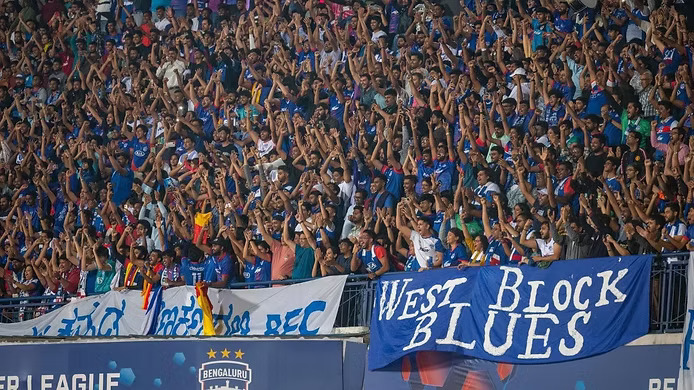
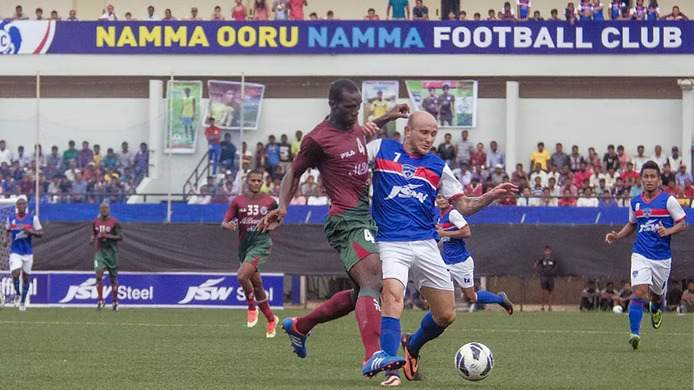
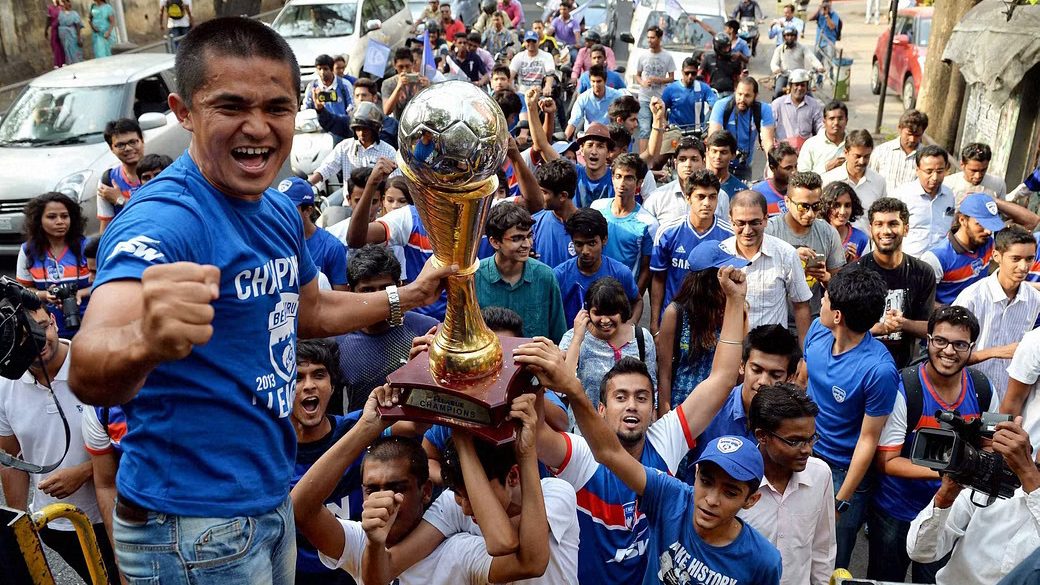
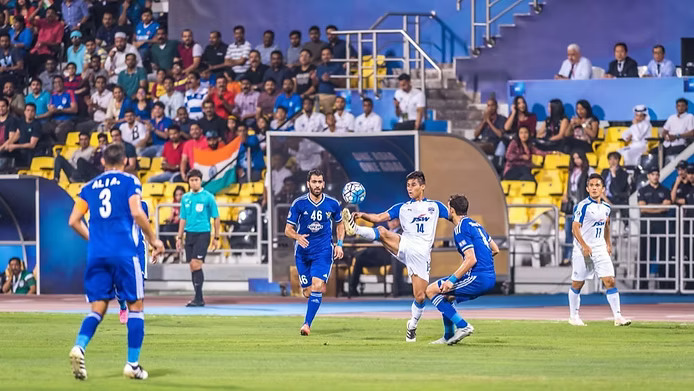
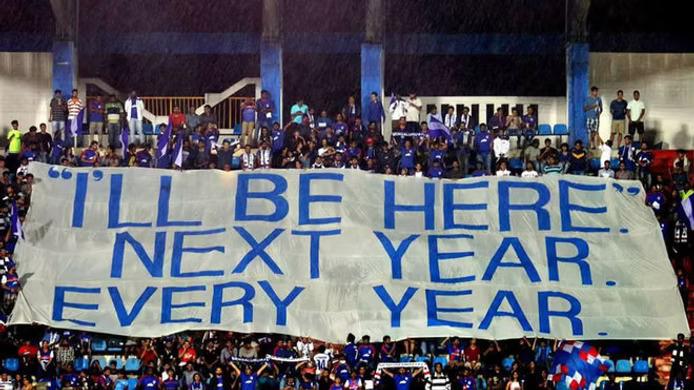


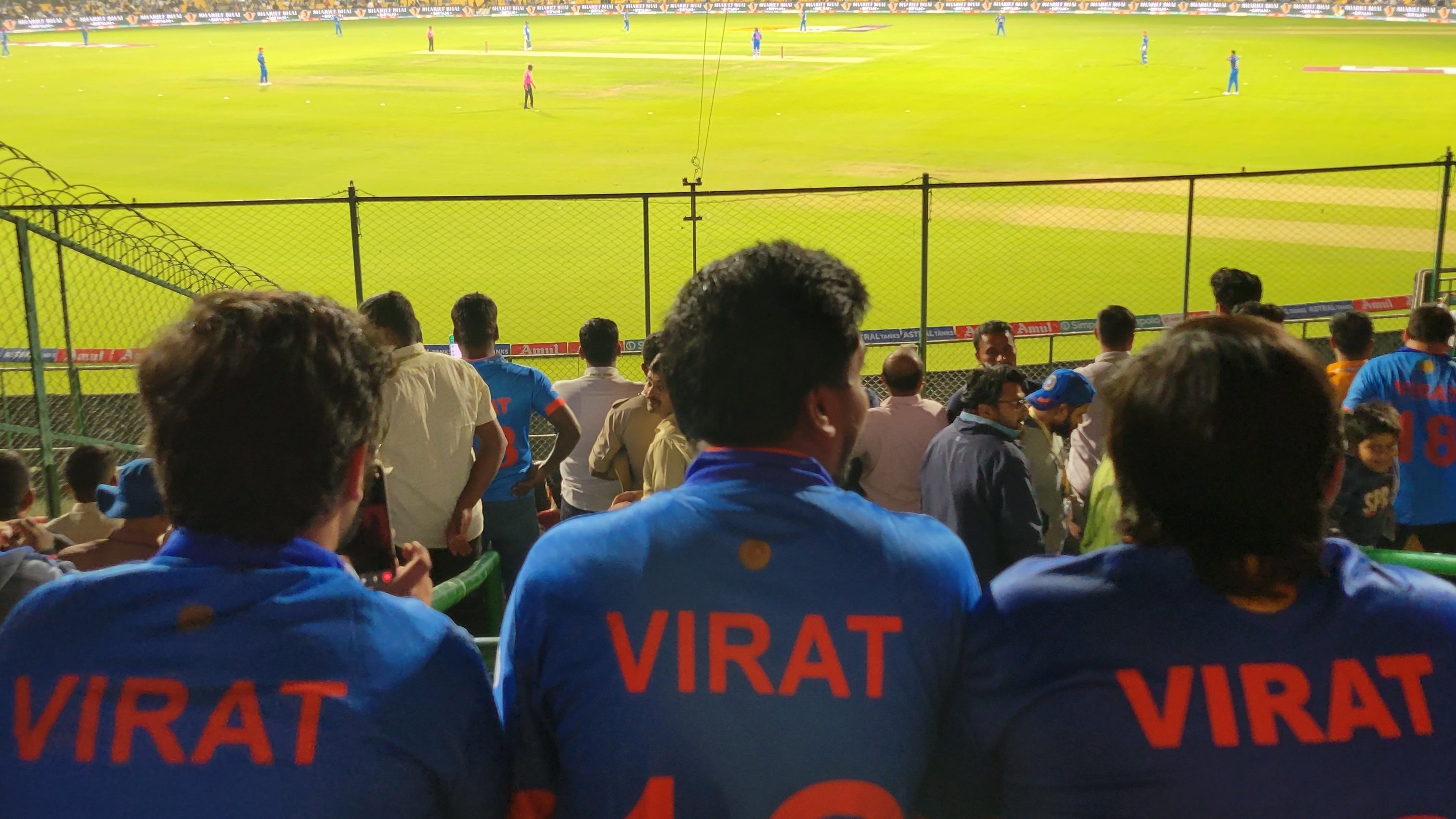
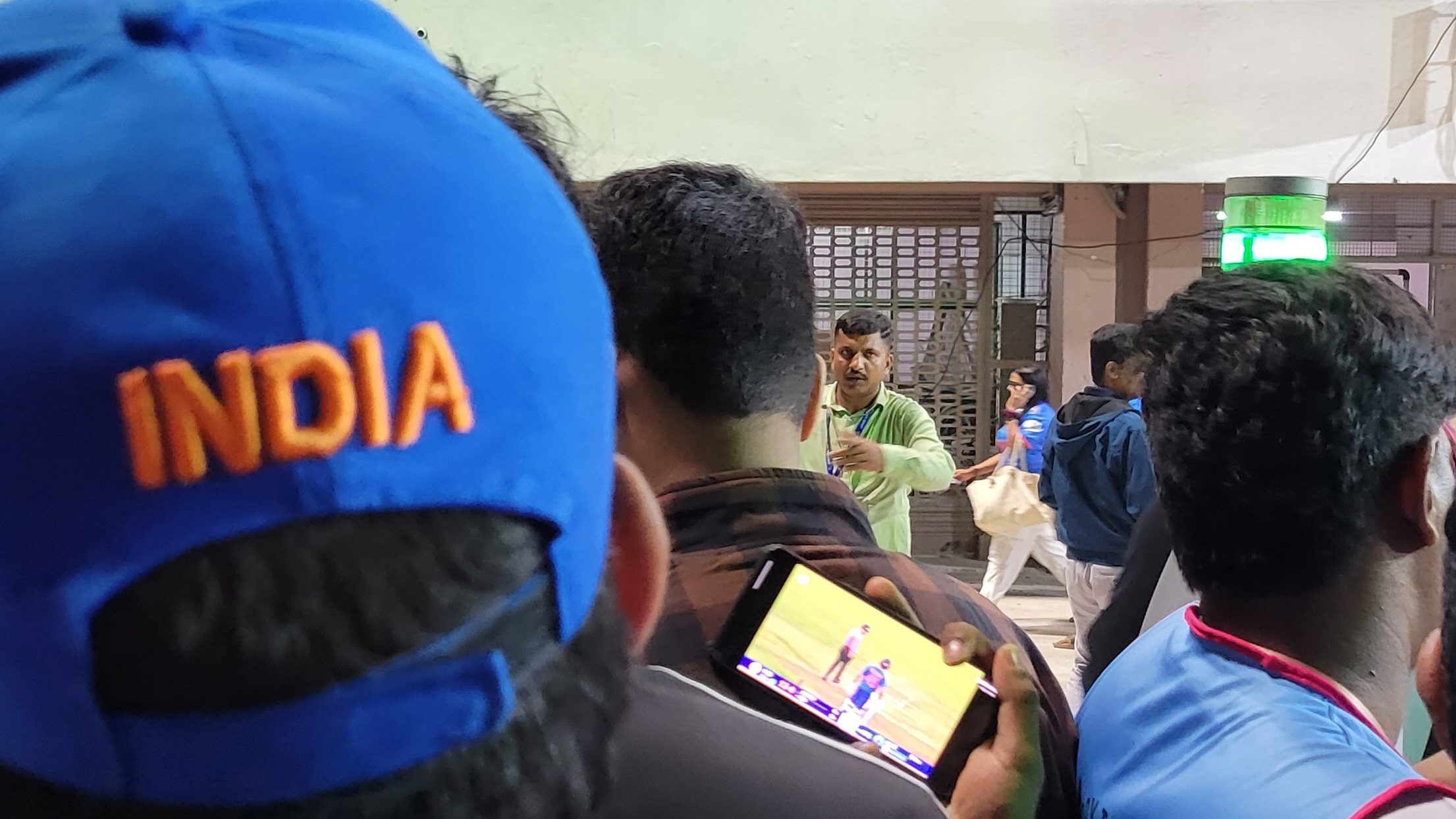
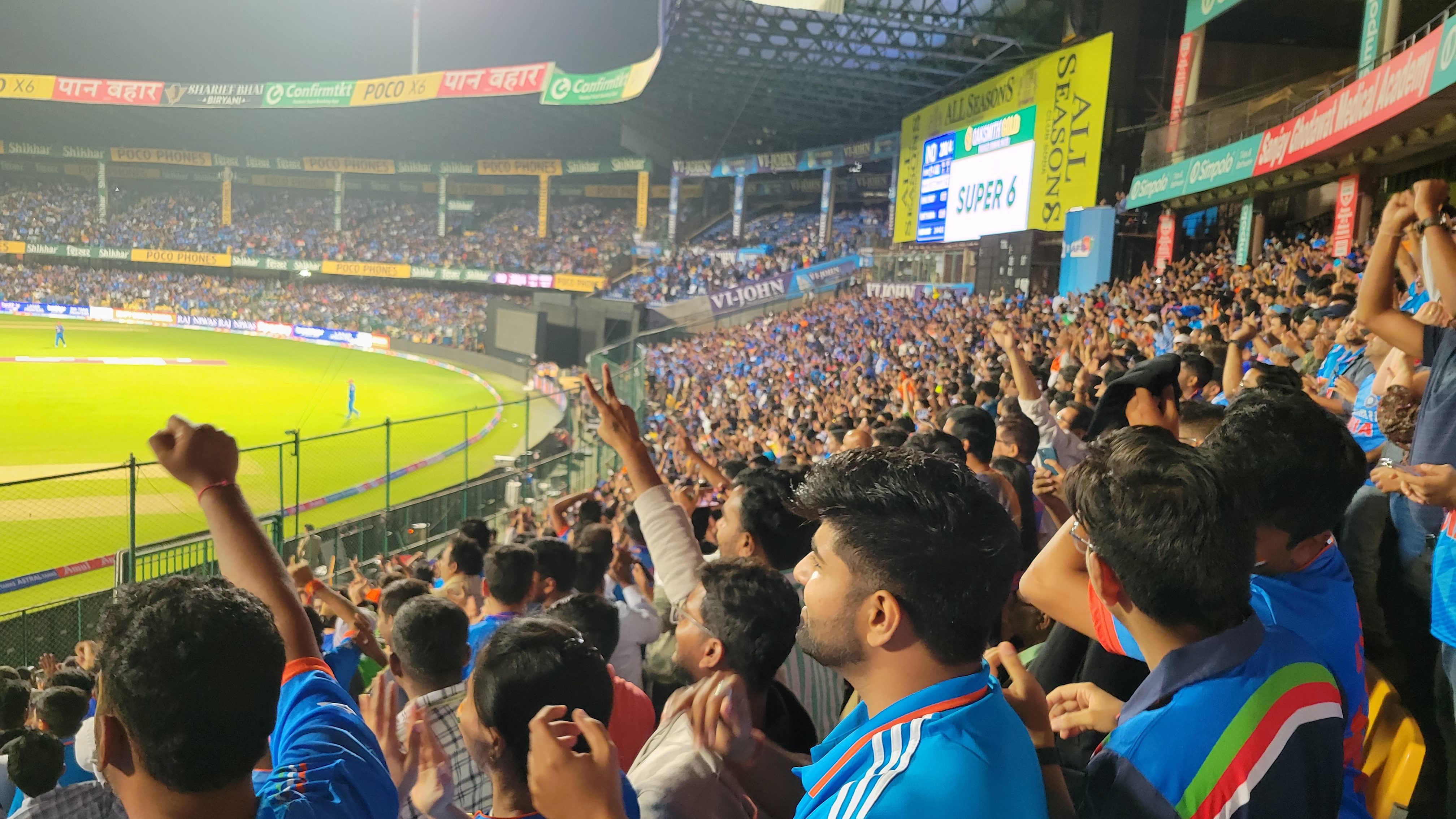
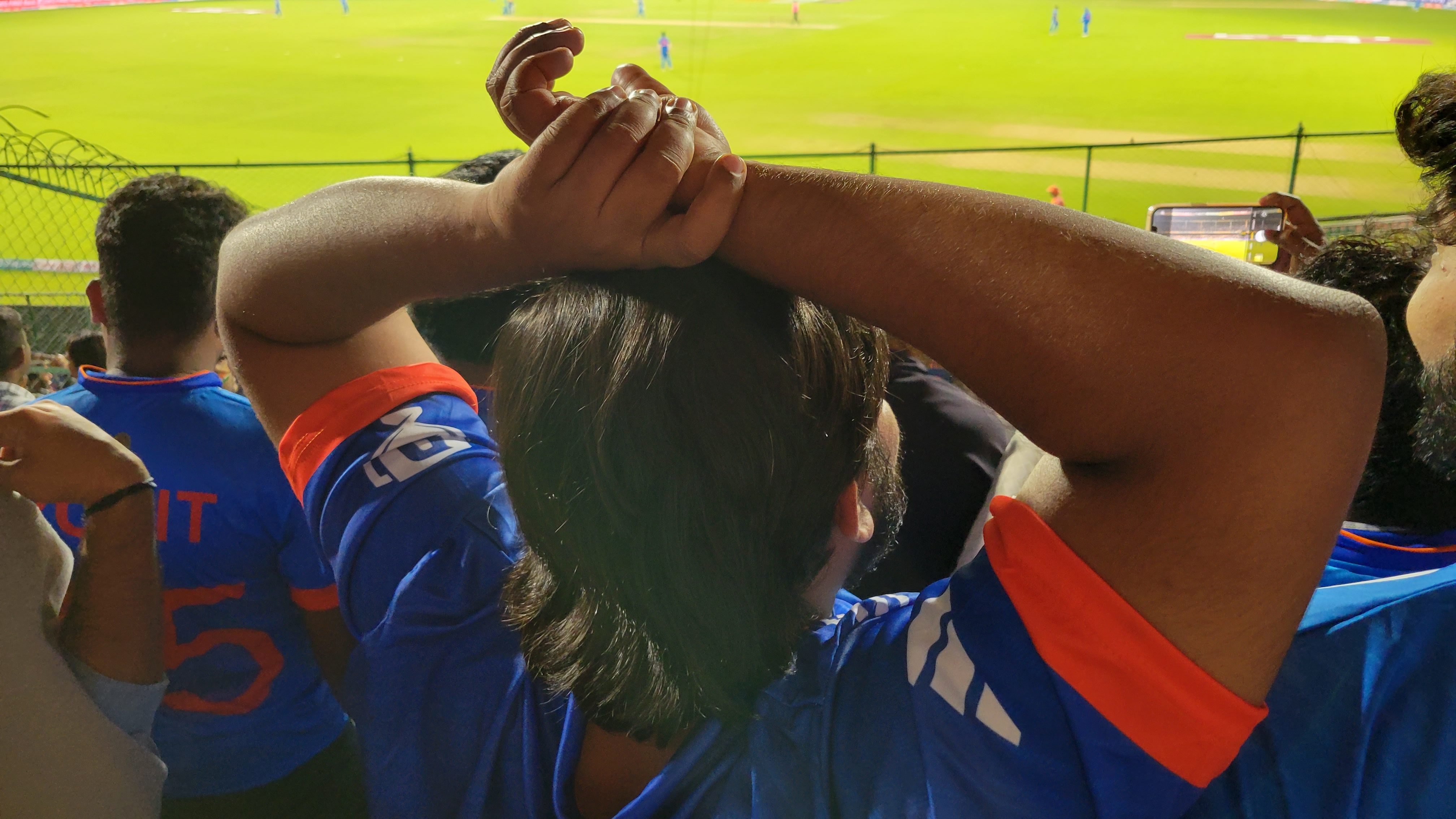



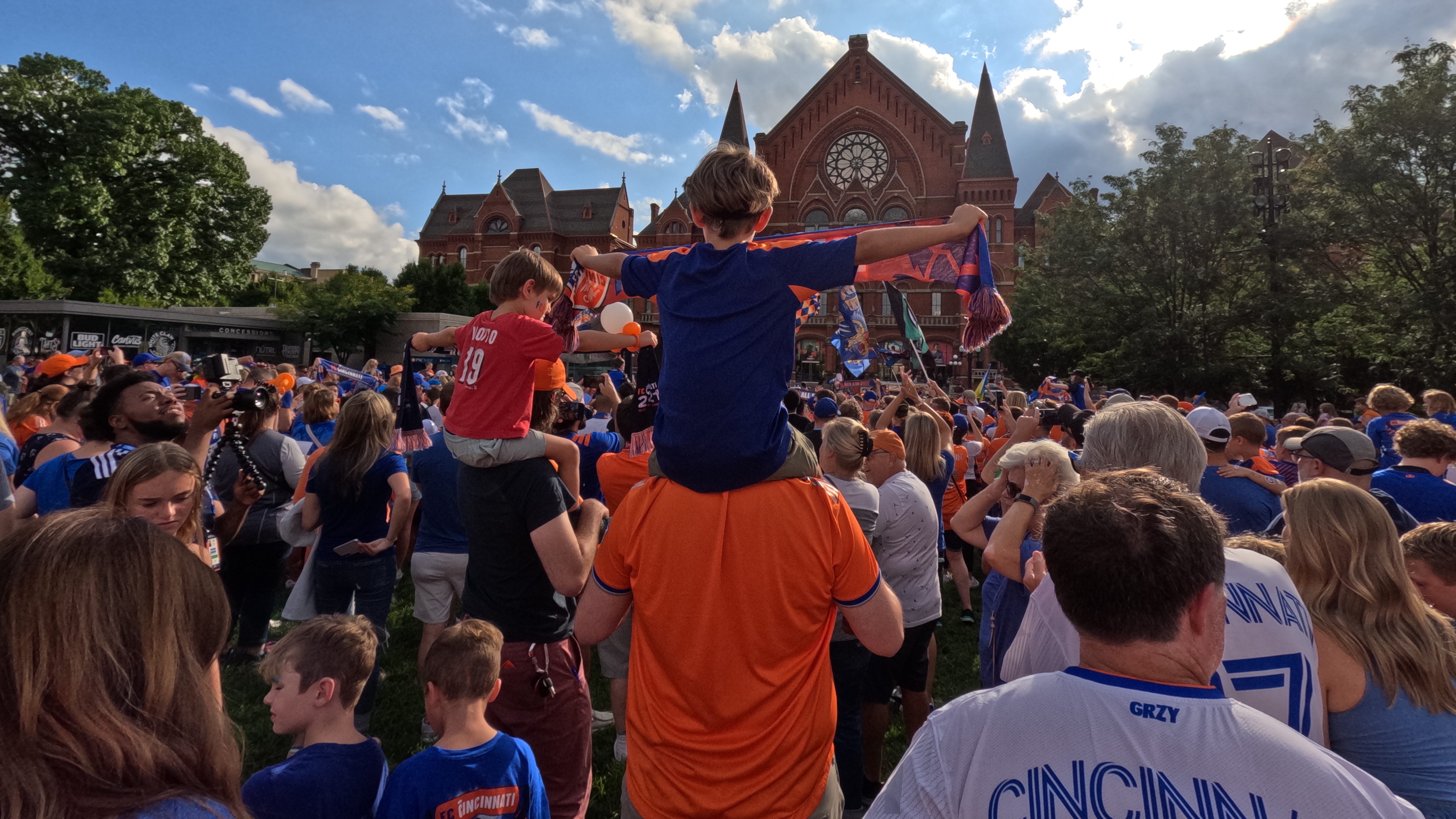

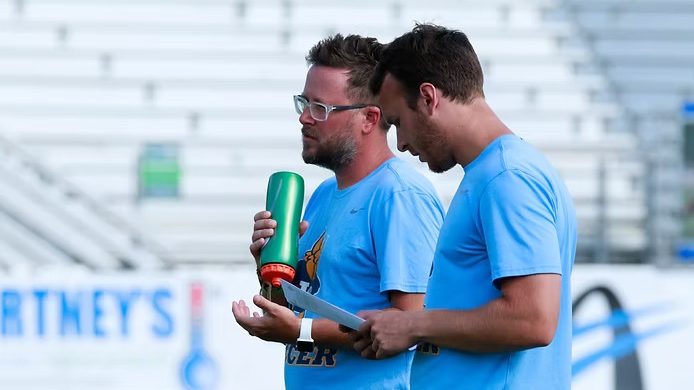
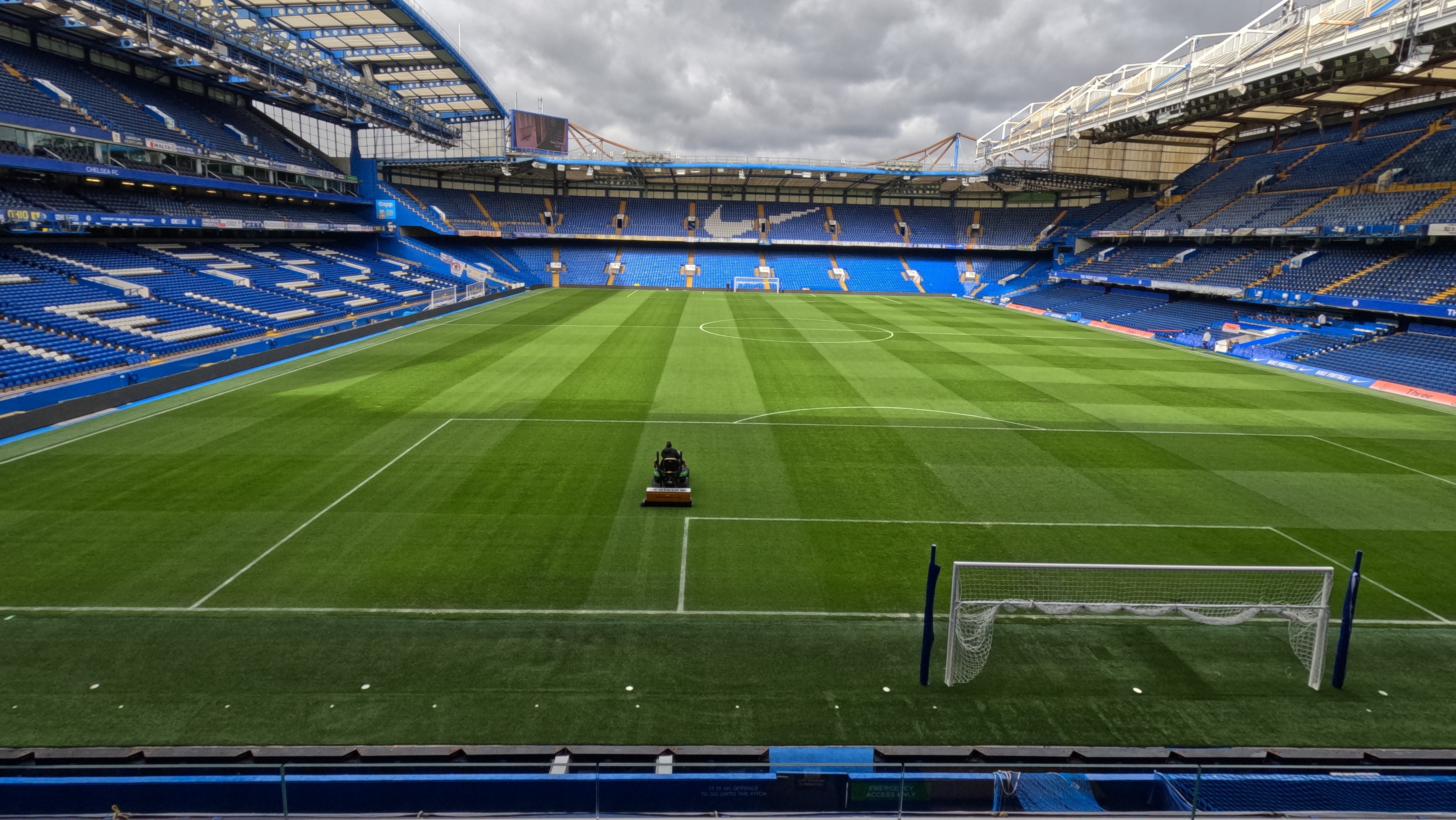

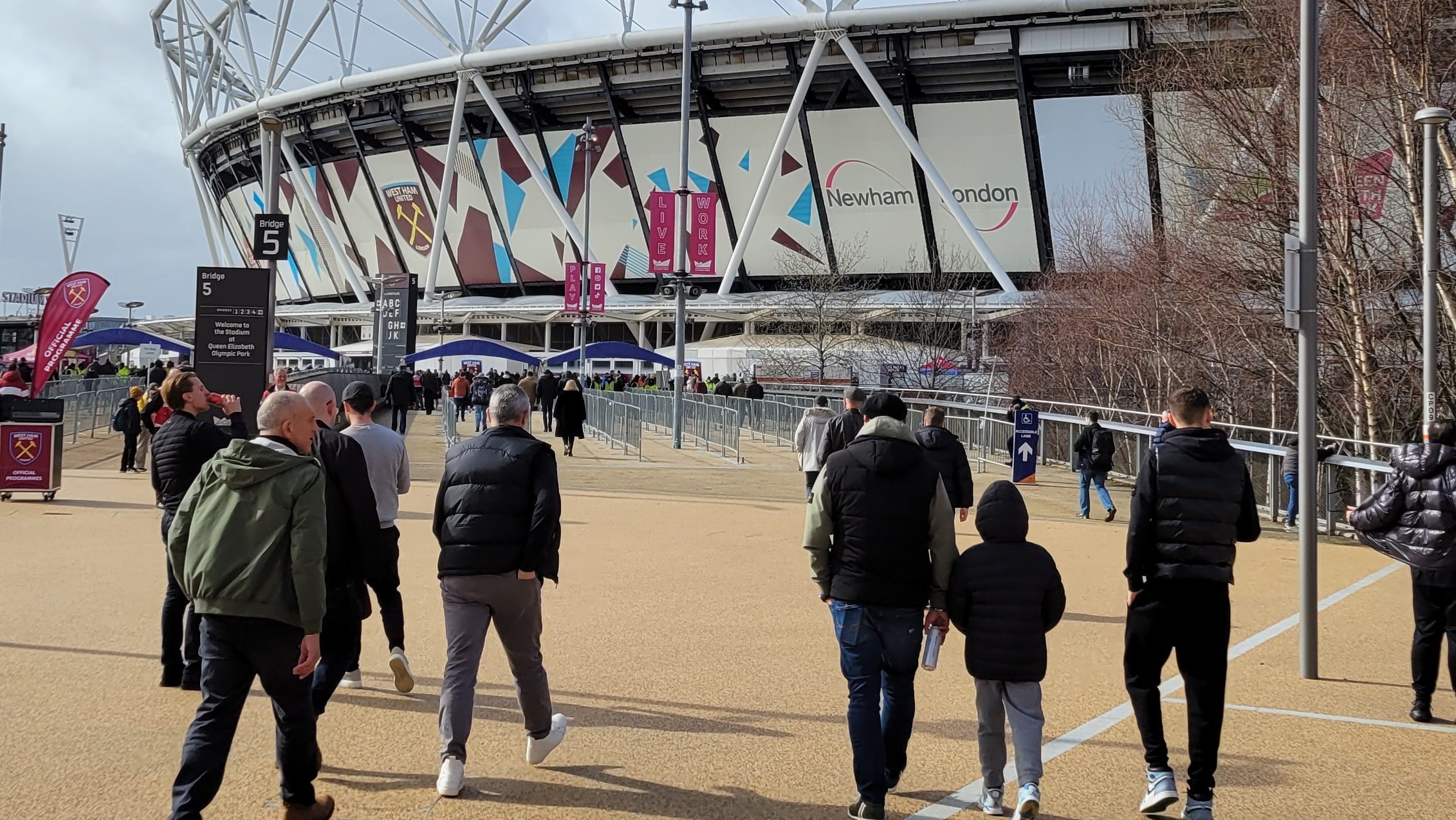




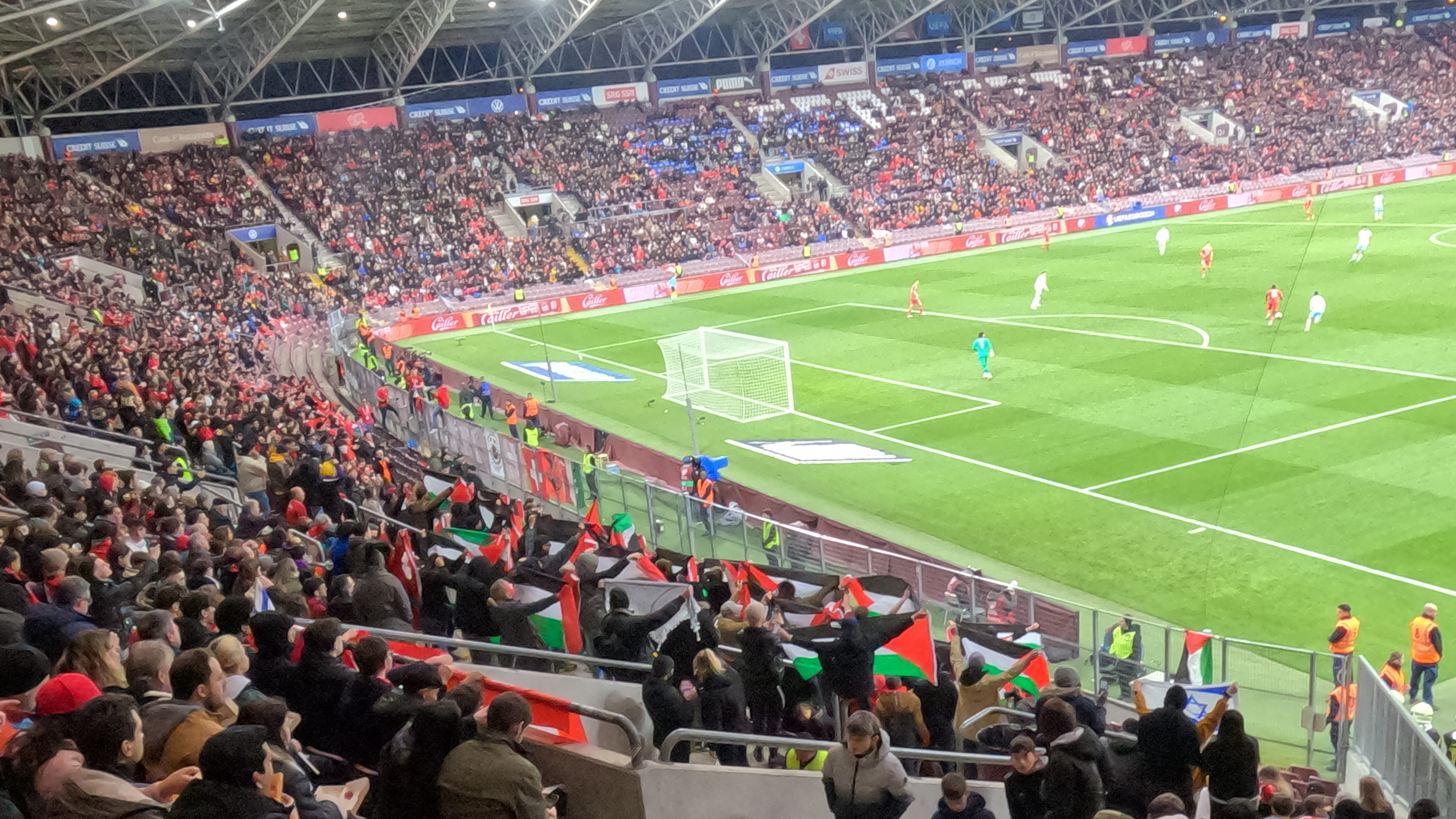
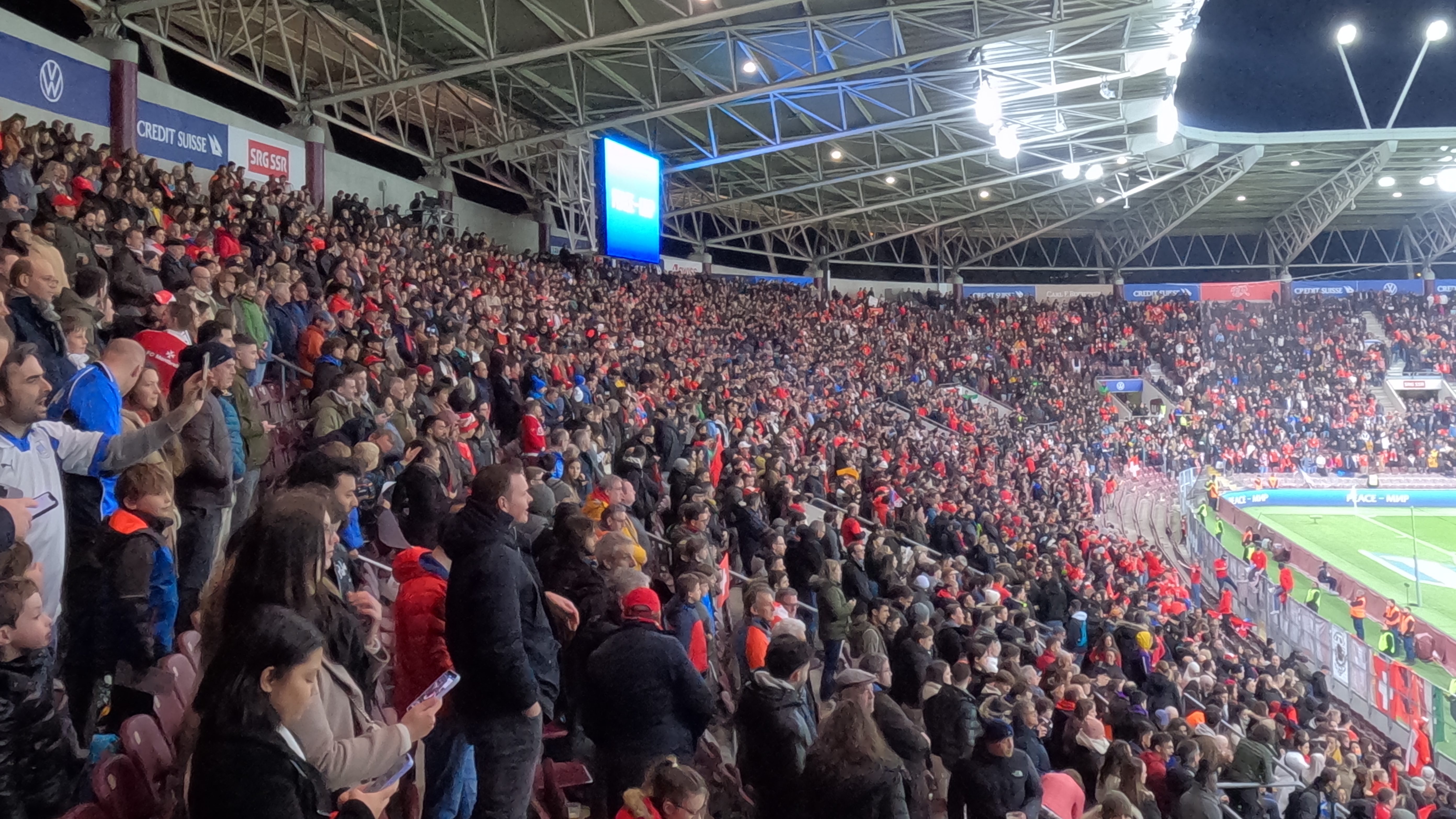
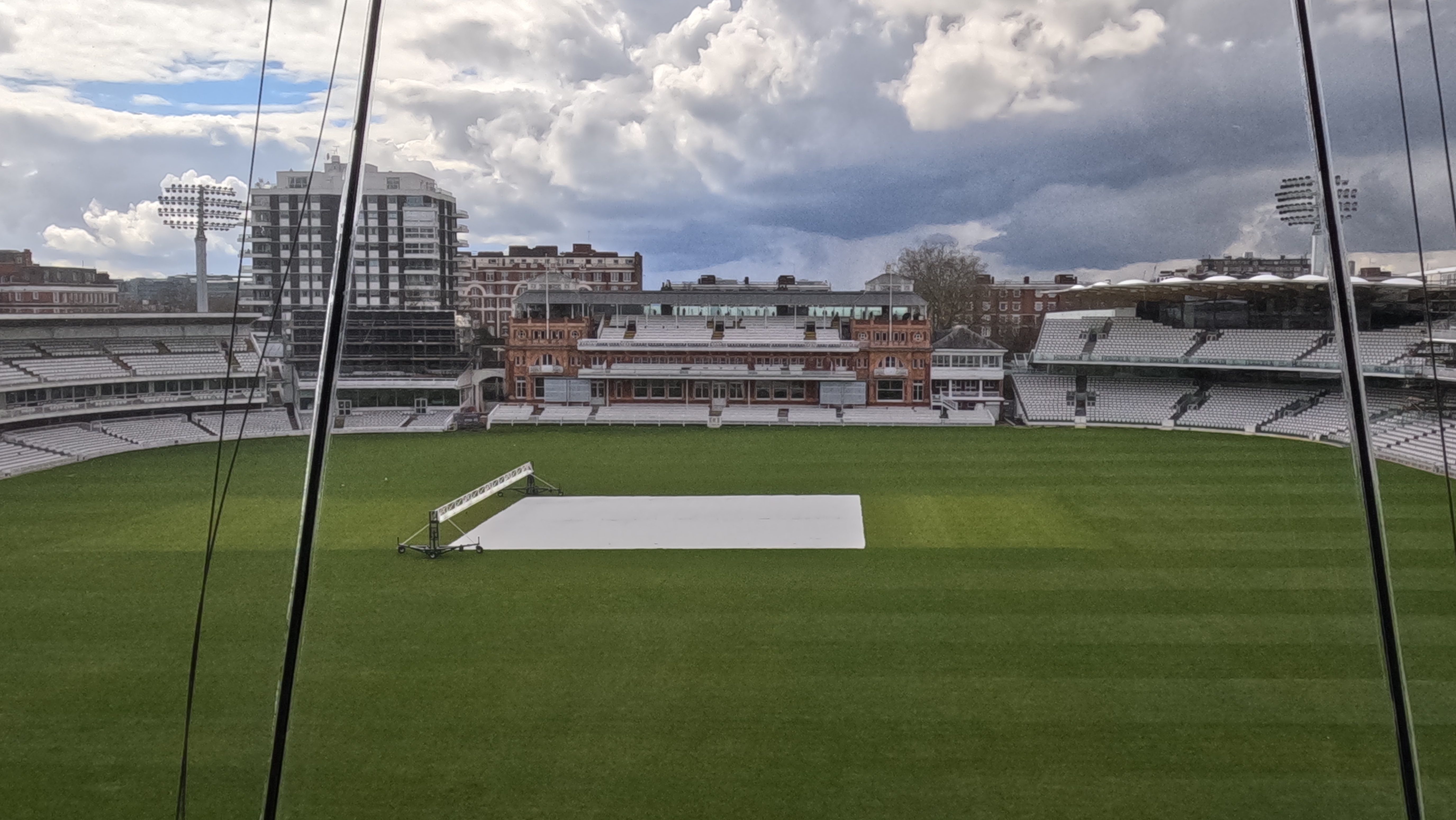
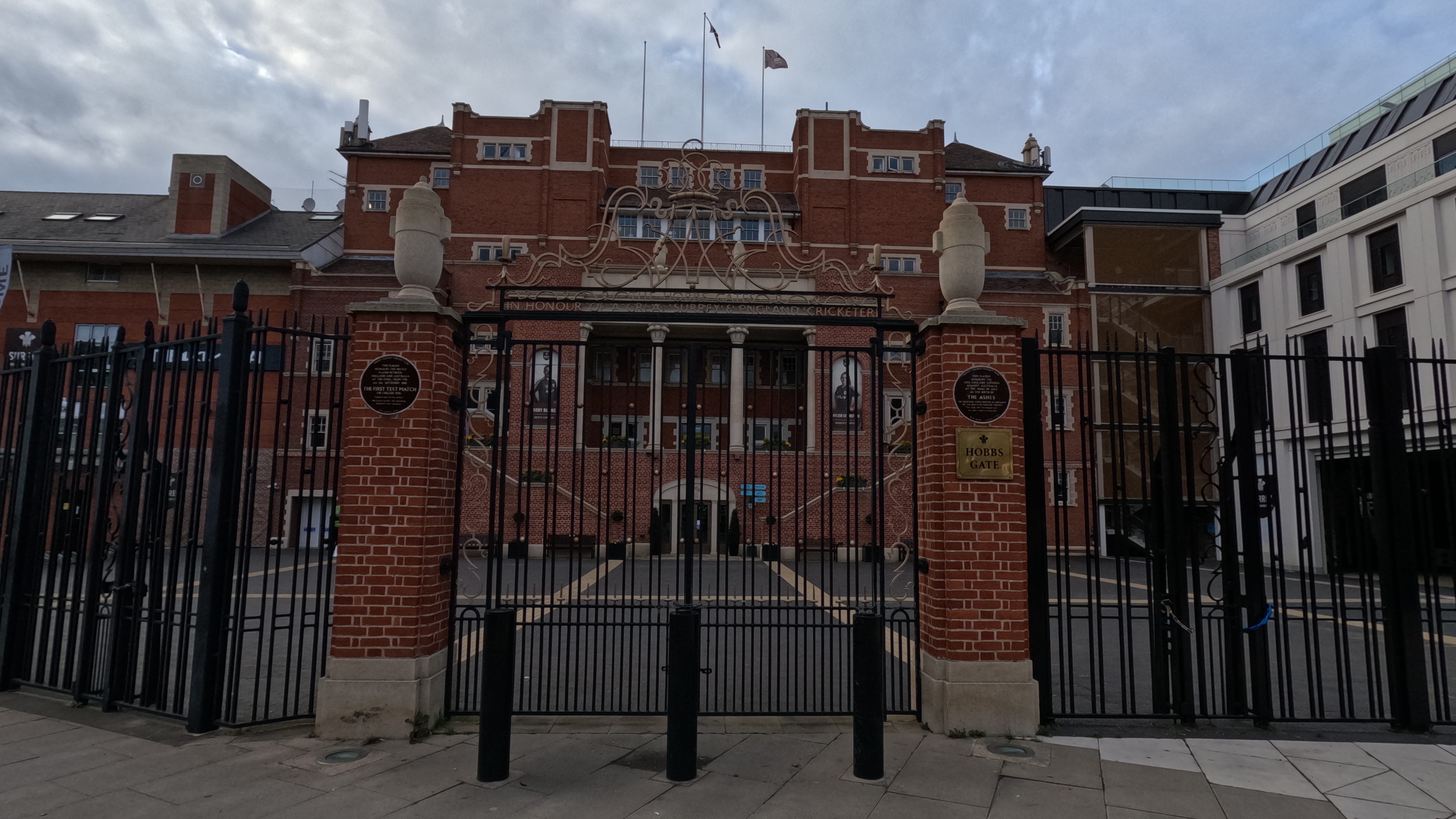
 En Eluttukal